Cannabis concentrates are no longer a niche product. They are now one of the fastest-growing segments of the cannabis industry, valued globally in the billions and projected to grow rapidly over the next decade. As interest increases, consumers are becoming more curious about how these products are made and what actually separates one type of extract from another. One of the most common questions is the difference between solvent vs solventless extractions and how each method impacts purity, safety, potency, and flavor.
At its core, the distinction comes down to whether chemicals are used to separate cannabinoids and terpenes from the plant. While both approaches aim to capture the valuable resin found inside trichomes, the path they take to reach that goal is very different. Understanding this difference helps you make more informed decisions when choosing concentrates such as live resin, rosin, badder, distillate, or diamond sauce.
How Cannabis Concentrates Are Created
Cannabis produces cannabinoids and terpenes inside tiny structures called trichomes. These trichomes contain the resin that extractors want to isolate. The purpose of extraction is to separate this resin from the rest of the plant material while preserving as many beneficial compounds as possible. Once separated, the resin can be refined into a wide range of textures and products, from soft badder to thick oils and crystalline concentrates.
The method used to break open or separate these trichomes directly affects the final product’s strength, aroma, clarity, and overall experience. Some processes rely on chemical solvents, while others depend only on mechanical force, temperature, and filtration. Both approaches are widely used across the industry, but they serve different goals.
What Solvent-Based Extraction Means
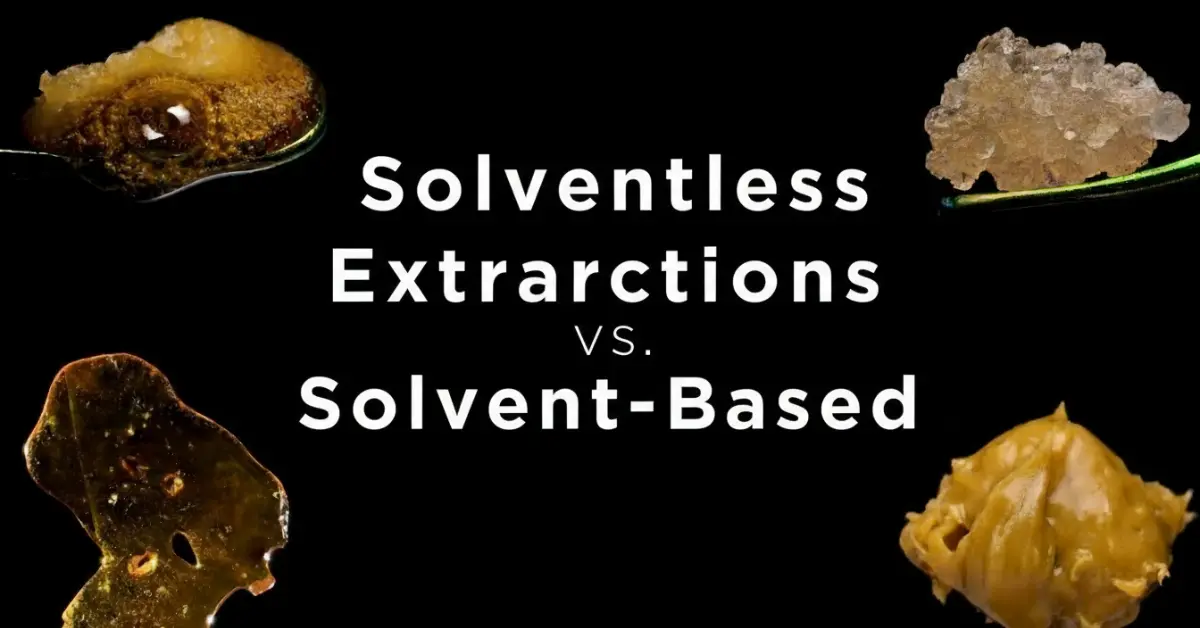
Solvent extraction uses a chemical agent to dissolve cannabinoids and terpenes out of the plant material. Common solvents include butane, propane, ethanol, and supercritical CO₂. During the process, cannabis is exposed to the solvent, which strips the resin from the plant. The mixture is then filtered, and the solvent is removed through controlled heating or vacuum systems.
This method is popular in large-scale production because it is highly efficient and can extract a very high percentage of cannabinoids. Many familiar products, such as live resin, shatter, crumble, sauce, distillate, and certain vape oils, are produced using solvent-based systems. With proper equipment and post-processing, manufacturers can control consistency, potency, and appearance with precision.
What Solventless Extraction Involves
Solventless extraction avoids chemical solvents entirely. Instead, it relies on physical methods such as heat, pressure, cold water, agitation, and filtration to separate trichomes from the plant. Rather than dissolving the resin, the process gently removes it using mechanical force.
Popular solventless techniques include rosin pressing, ice water extraction for bubble hash, and dry sifting. These methods aim to preserve the plant’s natural profile by keeping the extraction as simple and clean as possible. Products like flower rosin, hash rosin, bubble hash, and dry sift are all created using solventless approaches.
Because there are no chemicals involved, many consumers view solventless concentrates as more natural and closer to the original plant.
Key Differences in Process, Safety, and Output
The differences between solvent and solventless extractions are not only technical but also practical. Solvent systems require closed-loop machines, strict safety protocols, and post-processing steps to remove chemical residues. Solventless setups are generally simpler and carry fewer risks, as there are no flammable or toxic chemicals involved.
Solvent extraction is more scalable and consistent, which is why it dominates commercial production. Solventless methods, while often more labor-intensive, appeal to those who value craftsmanship, purity, and minimal processing.
Comparison of Solvent vs Solventless Extractions
Feature | Solvent-Based | Solventless |
Uses chemicals | Yes | No |
Yield efficiency | High | Lower |
Equipment complexity | Advanced, regulated | Simple, mechanical |
Residual risk | Possible if poorly processed | None from solvents |
Flavor profile | Can be altered by solvents | Often fuller and natural |
Scalability | High | Limited |
Purity and Safety Considerations
One of the biggest concerns among consumers is whether solvent-based products are safe. When processed correctly and tested by third-party labs, these products meet strict safety standards. However, the presence of solvents means that proper purging is essential.
Solventless concentrates remove this concern entirely, as no chemical agents are ever introduced. This is why many medical and wellness-focused consumers prefer solventless options. On authentic platforms, this preference is reflected in the demand for naturally processed extracts and full-spectrum products.
Potency and the Full-Spectrum Effect
Solvent-based methods often achieve very high THC percentages because solvents are extremely effective at stripping cannabinoids from the plant. Some distillates exceed 90% cannabinoid content. Solventless extracts may test lower in THC, but they often retain a wider range of cannabinoids and terpenes.
This broader profile creates what is known as the entourage effect, where compounds work together to enhance the overall experience. Many users find that solventless concentrates feel more balanced and flavorful, even if the raw THC number is lower.
Environmental and Workplace Impact
Solvent-based extraction requires careful chemical handling and waste management to avoid environmental harm. Facilities must follow strict regulations to protect workers and surrounding communities. Solventless methods generally have a smaller environmental footprint and lower workplace risk, making them appealing for small-batch and craft producers.
Choosing the Right Method for Your Needs
There is no single “best” method for everyone. Solvent extraction is ideal for large-scale production, consistency, and high potency. Solventless extraction suits those who value purity, flavor, and minimal processing. Both approaches play an important role in the modern cannabis market, and innovation continues to improve safety and quality on both sides.
Many consumers explore both options through products such as live resin, rosin, CBD concentrates, and terpene-rich extracts.
Frequently Asked Questions
Solvent extraction uses chemicals to dissolve resin, while solventless relies on physical methods like heat, pressure, and water.
They remove the risk of residual solvents, but overall safety still depends on clean processing and lab testing.
Solvent-based extracts often have higher THC levels, but solventless products offer fuller cannabinoid and terpene profiles.
When properly purged and tested, residual solvent levels are kept within safe limits.
They require more manual labor, lower yields, and careful handling, which increases production costs.