
Proper storage plays a major role in preserving the quality of THCA flower. Because THCA flower is minimally processed and rich in delicate compounds, even small storage mistakes can lead to loss of potency, flavor, and overall freshness. Heat, air, light, and moisture all interact with cannabinoids and terpenes, slowly changing the flower’s chemical structure over time.
Understanding how to store flower properly helps maintain its original profile and ensures that the flower remains enjoyable from the first use to the last. This guide explains storage fundamentals in a clear and practical way, focusing on real-world conditions rather than technical jargon.
What Makes THCA Flower Sensitive to Storage Conditions
THCA flower contains tetrahydrocannabinolic acid in its raw form. Unlike activated THC, THCA is more stable when kept away from heat and light. However, it is still vulnerable to environmental exposure.
Terpenes, which give flower its aroma and taste, are especially sensitive. They evaporate easily when exposed to air and degrade under UV light. At the same time, excess moisture can invite mold, while overly dry environments cause the flower to become brittle and harsh.
Because of this balance, THCA flower benefits from stable, controlled storage rather than improvised solutions.
Environmental Factors That Affect Flower Quality
Several external elements influence how long THCA flower stays fresh and effective.
Temperature: Warm conditions speed up chemical changes, while frequent temperature fluctuations stress the plant material.
Light: Exposure to light, especially sunlight, breaks down cannabinoids over time.
Oxygen: Air exposure gradually dries the flower and causes oxidation, reducing aroma and potency.
Humidity: Moisture levels decide whether the flower stays fresh and supple or becomes prone to mold.
Managing all four factors together is the foundation of proper storage.
Ideal Storage Conditions for THCA Flower
The best storage environment is cool, dark, dry, and stable. Most experts recommend keeping flower at room temperature, roughly between 60–70°F (15–21°C). This range slows down degradation without introducing condensation risks.
Relative humidity should remain around 58–62%. This level keeps the flower from drying out while also preventing mold growth. Darkness is equally important, as light exposure accelerates cannabinoid breakdown.
Finally, limiting airflow by using airtight containers helps preserve both potency and aroma.
Choosing the Right Storage Container
Container choice directly affects how well THCA flower ages. Airtight glass jars are widely considered the most reliable option. Glass does not interact with cannabinoids or terpenes, and a tight seal limits oxygen exposure.
Opaque or UV-resistant jars add extra protection by blocking light. While resealable pouches provided by reputable brands can work for short-term storage, they are most effective when kept sealed and stored in a dark place. Plastic containers and bags are generally not recommended for long-term use, as they allow air exchange and may affect flavor over time.
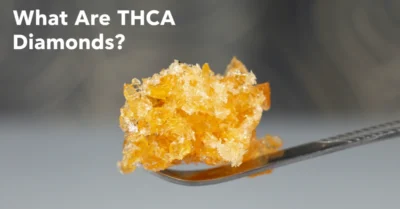
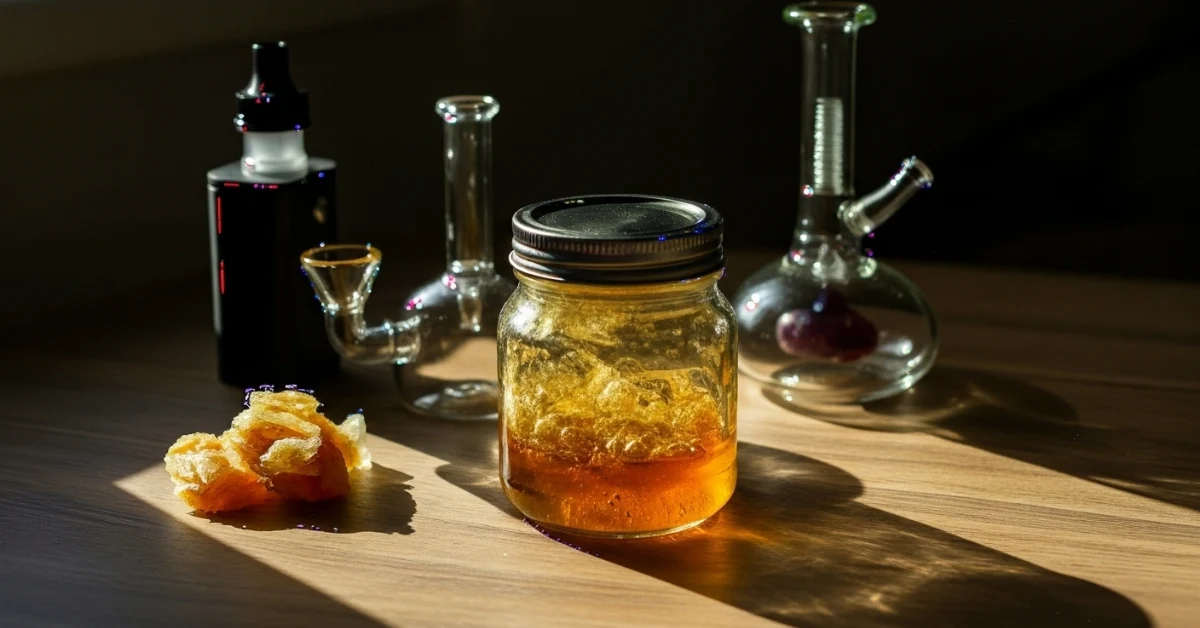
Over time, natural separation occurs. THCA begins to crystallize and forms solid, gem-like structures known as “diamonds.” The remaining liquid becomes terpene-rich sauce. This process can take several weeks, depending on environmental factors and desired crystal size.
Once separation is complete, the diamonds and sauce may be lightly mixed or packaged together as-is. The final product contains both solid crystals and a viscous liquid, offering a balance of potency and flavor.
Comparing Common THCA Flower Storage Options
Storage Option | Air Protection | Light Protection | Best Use Case |
Glass jar | High | Low unless opaque | Everyday storage |
UV-proof jar | High | High | Long-term freshness |
Resealable pouch | Moderate | Moderate | Short-term use |
Vacuum sealing | Very high | High | Bulk or extended storage |
This comparison highlights why container choice matters depending on how long you plan to store the flower.
Live Resin Badder vs Diamond Sauce
Feature | Live Resin Badder | Diamond Sauce |
Texture | Creamy and whipped | Crystals in liquid sauce |
Formation Method | Agitation and gentle heat | Natural separation over time |
Terpene Distribution | Evenly mixed | Mostly in sauce |
Potency Experience | Balanced | High potency with strong aroma |
Handling | Easy to scoop | Requires careful handling |
Managing Humidity Without Overcomplicating It
Humidity control packs are one of the easiest ways to maintain proper moisture levels. These packs regulate humidity automatically, releasing or absorbing moisture as needed.
They are especially useful in airtight jars and help protect THCA flower from both dryness and mold. For larger collections, adding a small hygrometer can help monitor conditions without opening containers frequently. Avoid storing flower in areas where humidity fluctuates often, such as kitchens or bathrooms.
Best Placement for Storing THCA Flower at Home
Location matters just as much as the container. A drawer, cabinet, or dedicated storage box away from heat sources is ideal. Avoid windowsills, cars, and areas near electronics that generate heat.
Refrigerators and freezers are not recommended. While they may seem like a way to keep flower fresh, temperature changes and condensation can introduce moisture and damage trichomes. Consistency is more important than extreme cooling.
Handling Habits That Protect Potency
How flower is handled during storage also affects quality. Grinding should be done only when needed, as ground flower exposes more surface area to air. Keeping buds whole preserves terpenes and cannabinoids for longer.
Excessive handling can knock off trichomes, which hold much of the flower’s active compounds. Using clean tools instead of hands minimizes damage and contamination. Labelling containers with strain names and storage dates also helps track freshness, especially when rotating between products like THCA flower and other hemp-derived options.
How Long THCA Flower Stays Fresh
Under proper storage conditions, THCA flower typically maintains good quality for about six months. With careful control of temperature, humidity, and light, it can remain usable for up to a year.
Over time, even well-stored flower may lose some aroma and potency. While it may still be safe to use, the experience becomes less vibrant. This is why many consumers prefer buying smaller amounts more frequently rather than storing large quantities long-term.
Common Storage Mistakes to Avoid
Some mistakes appear harmless but significantly reduce flower quality. Leaving containers open for extended periods allows oxygen and moisture to enter. Storing flower in clear containers exposed to light accelerates degradation.
Mixing different strains in one container can also affect flavor and aroma due to terpene transfer. Finally, storing flower near strong odors can lead to absorption, altering its natural profile. Avoiding these habits goes a long way in maintaining consistency.
Why Proper Storage Protects Value and Experience
THCA flower is often chosen for its purity and natural cannabinoid profile. Proper storage ensures that these qualities remain intact, protecting both the investment and the intended experience.
Many users who explore concentrates, CBD flower, or THCA products notice that freshness directly influences satisfaction. Storage is not just about longevity, it’s about preserving the original character of the flower.
Final Thought
Storing THCA flower properly is a balance of the right container, stable conditions, and mindful handling. By controlling heat, light, air, and humidity, you can preserve freshness, protect potency, and enjoy a consistent experience over time.