
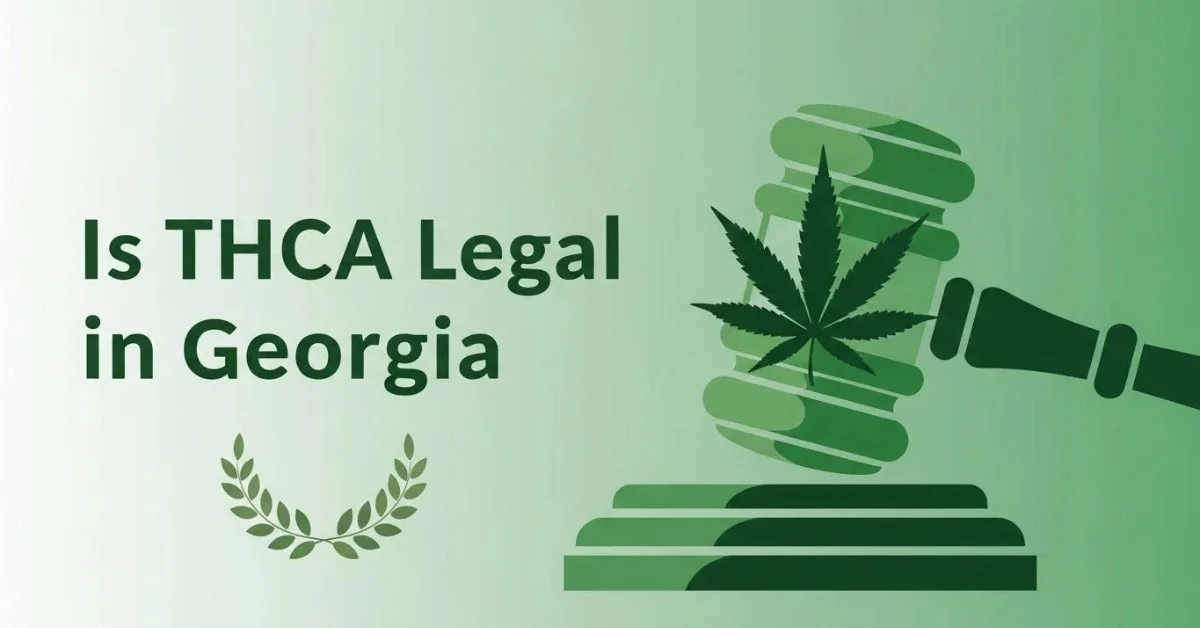
The ever-changing hemp environment in the state may be intimidating, and it is hard to believe that amidst all the changes, “Is THCa Legal in Georgia?” The laws have become so restrictive in the last one year altering what may be purchased and experienced by the consumers. Authored products that previously could be readily located have taken the focal point of stringent rules and regulations whereby most of the population is left without identifying what they can or cannot do.
The current situation has been disaggregated in an easily comprehensible and accessible manner in this blog, which will help you comprehend the present state in Georgia regarding THCa, the effects of these changes on regular customers, and how you can keep up with the constantly shifting regulations.
Key Takeaways
- In Georgia, Delta-9 THC has been made equal to THCa in the law, resulting in numerous high-THCa products being illegal.
- A product can only be considered legal where it is of hemp origin and has less than 0.3% total THC including THCa following conversion.
- Certificates of Analysis (COAs) should be read thoroughly to ensure that the content of THCa and the total amount of THC are counted.
- Online purchases are not the ultimate solution to legality and deliveries into Georgia may still be legally risky.
- Carrying the lab reports and original packaging would assist in proving the compliance and prevent legal problems.
- Sources that are reliable and reputable should be used to obtain THCa, with lab testing and correct labeling of the product.
- Adherence to these regulations is necessary to consume safely and not break the legal framework of Georgia.
What Is THCa?
Tetrahydrocannabinolic acid (THCa) is a naturally occurring compound in fresh hemp and cannabis plants, which is the inactive form of THC. In its pure form, THCa will have no psychoactive effects making it safe in the unprocessed cannabis or hemp.
It is particularly important when heat is used, a process known as decarboxylation, which converts THCa into THC, the substance that causes the high feeling with marijuana. The reason why THCa is used in heating products like flower, vapes, and concentrates is also explained in this conversion. Since THCa can turn psychoactive, regulators pay close attention to its level when making hemp and cannabis products legal.
How THCa Differs From THC and CBD
THCa is another cannabinoid that can be found naturally in raw cannabis and in hemp. As opposed to THC, it has no psychoactive effect by itself, and it will not put you high unless it is heated and transformed. Another non-intoxicating cannabinoid is CBD, yet it does not act like THCa and is not converted into this substance.
Although THC, CBD and THCa are related in terms of chemistry, they differ in terms of effects, use and legal status, which makes THCa a distinct cannabinoid among the major ones.
Reported Benefits and Uses
The possible wellness effects of THCa are frequently used, especially in its crude form before heat is applied to it. Individuals can turn to THCa in order to aid relaxation, decrease inflammation, and relieve pain. These benefits can be achieved by taking raw cannabis, juices, tinctures, or other products that are not heated. The psychoactive effects of the plant require heating to transform into THC so that its effects can provide the normal high experienced with cannabis.
Overview of Georgia’s Hemp & Cannabis Laws
The hemp and cannabis legislation in Georgia establishes a strong division between hemp and marijuana, and this has a substantial impact on the regulation of the THCa products. The state in which hemp-derived products are not prohibited provided that they do not have more than 0.3 per cent of Delta-9 THC in dry weight. This is the same level as that provided by federal regulations in the 2018 Farm Bill, and implemented by state laws like the Georgia Hemp Farming Act of 2019, which allowed licensed cultivation, processing, and sale of hemp and its products.
Some recent changes such as SB 494 in 2024 have made such regulations even stricter by adding THCa to the overall calculation of THC. This modification deals with the possibility of THCa turning into psychoactive THC under heating conditions that seal the legal loopholes of the past and make sure that after decarboxylation, products would not contain more than the legal amount of THC. Consequently, the previously compliant products are now under the more stringent scrutiny.
This is essential to keep informed consumers and businesses. Adherence must be done with special care to product testing, labelling as well as documentation since Georgia law is strict on the enforcement of limits. The knowledge of the state hemp and cannabis system assists the buyers and sellers in legal matters by not going too far and keeping the hemp products within the confines of the law.
Georgia Possession Laws
Possession of cannabis products that are over the allowed therapeutic amounts of the legalized substance can lead to criminal prosecution in Georgia. Countless times THCa flower and concentrates tend to exceed the permitted amount of THC when the THCa is converted to THC. The fines depend on the value, where small values may lead to misdemeanant and huge fines attract felony charges. Travelling with hemp products in the state, it is necessary to carry receipts and certificates of analysis in order to demonstrate that the hemp products are not violating the law.
Georgia Medical Marijuana Laws
The medical marijuana program in Georgia is extremely restricted and comes in the form of low-THC oil containing up to 5 percent of THC and is only available to registered patients. The products of THCa are not found in the state-licensed dispensaries. Only patients with certain ailments like epilepsy, cancer, or multiple sclerosis will access the service. To legally obtain medical cannabis oil, patients need to be enrolled and have a Low THC Oil Registry Card and the program does not apply to recreational or general wellness use of the product.
Why THCa Was Previously Legal in Georgia
THCa used to be legal in Georgia due to the fact that both state and federal laws controlled only Delta-9 THC. The products with less than 0.3% Delta-9 were considered hemp, and high-THCa flower and concentrates were sold freely. The fact that THCa was not included in the overall limit of the THC allowed many brands to market these products freely in the category of hemp. This legal loophole would last until new laws altered the method of measuring THCa, putting now legal products under tighter examination.
What THCa Products Are Now Illegal in Georgia?
Under Senate Bill 494, THCa flower is now effectively illegal because the state strictly bans the sale of all unprocessed hemp flower and enforces a “Total THC” standard that counts THCa toward the legal limit. This testing requirement also disqualifies most THCa vapes and concentrates, as their combined THCa and Delta-9 levels typically far exceed the allowed 0.3% threshold. Additionally, the legislation explicitly prohibits hemp-infused food products like brownies, cookies, and chocolates, targeting items that might appeal to children. While these forms are banned, gummies and beverages generally remain legal, provided they adhere to specific packaging and potency regulations.
What Is Still Legal in Georgia
Despite the strict ban on flower and food, hemp-derived gummies and beverages remain legal in Georgia because the law explicitly exempts them from the “food product” prohibition. You can also legally purchase oil-based tinctures, provided they are not infused into bakery items like cookies or brownies. However, to remain compliant, all these products must test below the 0.3% Total THC limit, be sold only to adults 21 and older, and come in child-resistant packaging with full lab reports (COAs).
Risks and Legal Gray Areas in Georgia
The biggest risk is that THCa flower is visually and chemically indistinguishable from illegal marijuana to law enforcement without a lab test, meaning police may arrest you first and test later. Additionally, while many online retailers claim their products are “federally legal,” Georgia’s specific Total THC laws override these claims; if a product shipped to you tests above 0.3% Total THC (which most flower does), you could face criminal possession charges. Finally, lab reports (COAs) from out-of-state vendors often use different testing standards that Georgia courts do not accept, leaving you with no valid legal defense if your product is seized.
Frequently Asked Questions
Conclusion
Georgia’s implementation of Senate Bill 494 has fundamentally shifted the hemp landscape by enforcing a “Total THC” standard that effectively bans high-THCa flower and concentrates. Consumers must now exercise extreme caution, as products that were previously accessible may now carry the risk of criminal possession charges due to these stricter testing limits and the specific prohibition on unprocessed flower. To remain safe and compliant, stick to legal alternatives like hemp-derived gummies or beverages and always verify the Certificate of Analysis (COA) before purchasing. Ultimately, assuming that “federally legal” products are safe in Georgia is a dangerous misconception; understanding these specific state regulations is the only way to avoid significant legal consequences.