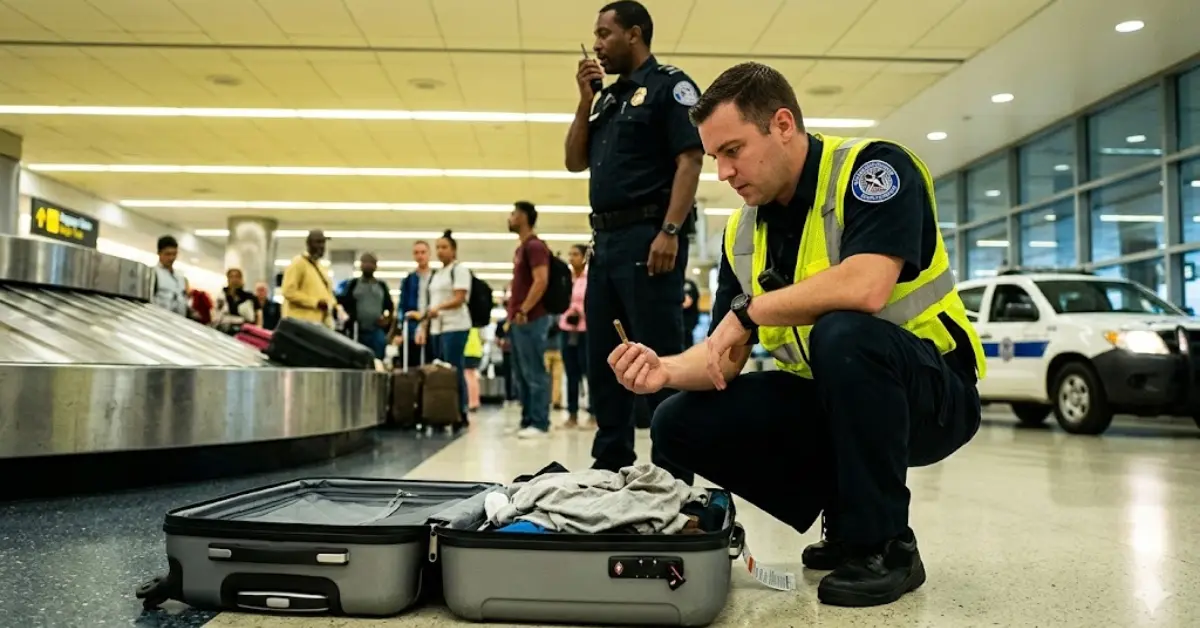
Packing for a flight often raises questions about what is allowed and what is not, especially when it comes to cannabis products. One of the most common concerns travelers have is whether pre rolls can be placed inside a checked bag. With changing laws across different states and increasing acceptance of cannabis at a local level, confusion around air travel rules is understandable. However, airport security and airspace regulations follow a different set of rules that travelers must be aware of before heading to the airport.
This guide explains how checked baggage is screened, how laws are applied during air travel, and what risks exist when carrying pre rolls in your luggage. It also outlines safer alternatives and practical considerations so travelers can make informed decisions before flying.
How Air Travel Laws Apply at Airports
Airports and flights operate under federal jurisdiction in the United States. This means that even if cannabis is permitted in your home state, those state-level permissions do not automatically apply once you enter an airport or board a plane. Air travel rules are governed by federal law, which still places restrictions on cannabis products.
Because of this, the legality of carrying pre rolls does not depend on where you live or where you are flying from. Instead, it depends on federal regulations that apply across all airports and flights. This distinction is important because many travelers assume state laws carry over into airports, which is not the case.
Some airports in cannabis-friendly states may offer disposal options before security, but these are designed to reduce violations rather than approve possession. The presence of such options does not change the underlying rules governing air travel.
What Happens to Checked Bags During Screening
Checked baggage goes through a separate screening process that passengers do not witness directly. All checked bags are scanned using advanced imaging technology before being loaded onto an aircraft. If something in the bag cannot be clearly identified, the bag may be opened for a manual inspection.
During this process, screeners are not specifically searching for cannabis products. Their primary role is to identify items that could pose safety or security risks. However, if a prohibited item is discovered during inspection, it cannot be ignored. At that point, airport procedures require the item to be addressed according to applicable laws.
Unlike carry-on screening, where passengers are present, checked bag inspections happen without the traveler nearby. This means decisions are made without immediate clarification, which can increase complications if restricted items are found.
Checked Bag vs Carry-On: Risk Comparison
Some travelers believe placing pre rolls in a checked bag is less risky than keeping them in a carry-on. In reality, both options involve screening and enforcement, but the outcomes can differ.
Aspect | Checked Bag | Carry-On Bag |
Screening visibility | Inspected without passenger present | Inspected with passenger present |
Chance to remove item | None once checked | Possible before final screening |
Law enforcement involvement | Possible after landing | Possible at security checkpoint |
Control over bag | Limited during flight | Full control until boarding |
Checked bags do not provide a safe loophole. In some cases, they may carry greater uncertainty because inspections happen without the traveler’s input.
Possible Outcomes If Pre Rolls Are Found
If pre rolls are discovered in a checked bag, the outcome depends on several factors, including airport procedures and local enforcement practices. In many cases, the item may simply be removed, and a notice is left inside the bag. However, this is not guaranteed.
Authorities may be contacted if the contents are considered illegal under federal guidelines. This can lead to questioning, delays, or further action depending on location and quantity. While serious penalties are not common for small amounts, the situation can still disrupt travel plans and create unnecessary stress.
Additionally, any involvement with airport security or law enforcement may result in closer scrutiny during future trips.
Factors That Increase Attention During Inspection
Certain conditions can increase the likelihood of a bag being flagged for inspection. Strong odors, unusual packaging, or dense organic material may prompt closer examination. Bags that contain multiple opaque containers or accessories related to cannabis use can also attract attention.
Checked luggage is evaluated using density and shape analysis, meaning concealment methods rarely go unnoticed. Relying on hiding techniques is risky and does not change how rules are applied if an item is found.
Considering Safer Alternatives While Traveling
Many travelers choose alternatives that eliminate the risk of carrying pre rolls through an airport. One common option is purchasing products legally at the destination, provided local laws allow it. This avoids transporting anything through security altogether.
Another alternative involves hemp-derived products that meet federal THC limits. While these may be legal under federal guidelines, visual similarity can still cause confusion during inspections. Clear labeling and documentation may help, but they do not guarantee a smooth experience.
Some travelers also opt to bring accessories only. Items such as rolling papers, storage containers, or tools without residue are generally permitted. These can be paired with legally obtained products after arrival.
Domestic vs International Travel Considerations
Domestic flights already carry legal complexity, but international travel adds significantly higher risk. Crossing national borders with cannabis products can lead to severe penalties in many countries, regardless of legality in your home region.
International airports enforce customs regulations strictly, and travelers are subject to the laws of the destination country. Even small quantities can result in fines, detainment, or worse. For international trips, avoiding cannabis-related products entirely during travel is the safest approach.
Planning Ahead for a Stress-Free Flight
Understanding how airport screening works and how laws are enforced allows travelers to plan responsibly. Checking current regulations, knowing airport policies, and choosing alternatives can prevent complications. Educational content and travel-focused insights found alongside product information can help users stay informed without encouraging risky behavior.
Travel should be about reaching your destination smoothly, not dealing with unexpected issues during security checks.
Frequently Asked Questions
Under federal regulations, cannabis products are restricted during air travel. Even on domestic flights, placing pre rolls in a checked bag is not considered permitted.
All checked bags are scanned, and many are opened if something appears unclear. Passengers are not present during these inspections, which can complicate outcomes.
Detection dogs are primarily trained for security threats, but some are trained to identify controlled substances. Odor can increase the chance of inspection.
State-issued medical authorization does not override federal air travel rules. Airport screening follows federal guidelines regardless of medical status.
Purchasing legally at your destination avoids airport screening issues entirely and is generally considered the lowest-risk option when local laws allow it.