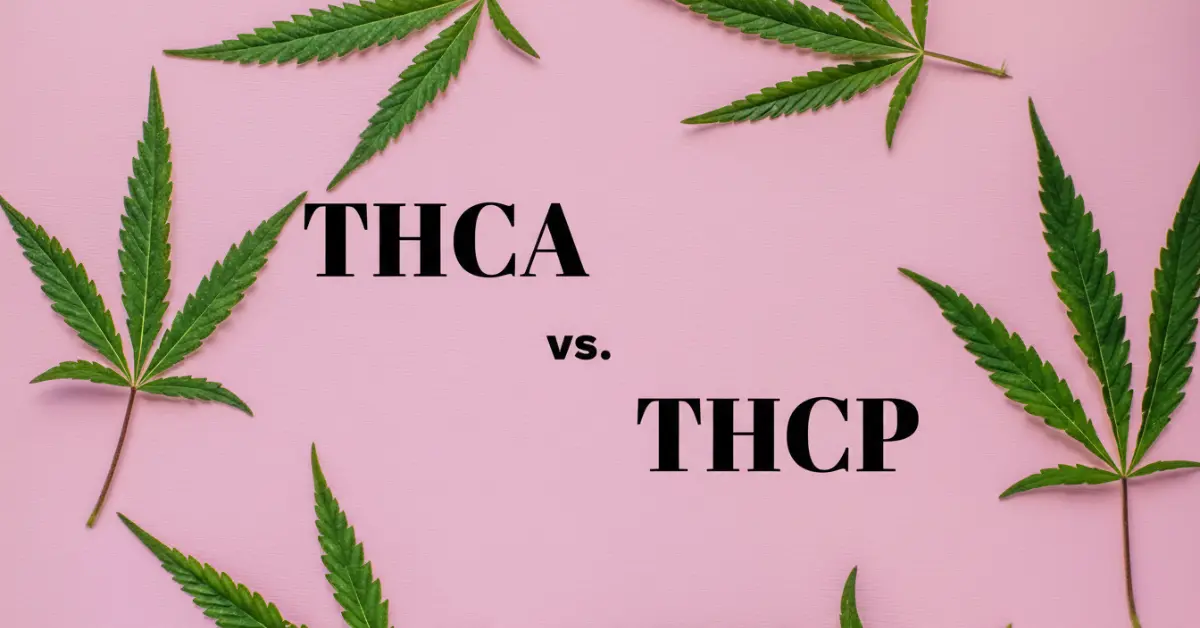
The difference between THCA and THCP comes down to psychoactivity, potency, chemical structure, natural abundance, and how each interacts with the body’s endocannabinoid receptors.
THCA (tetrahydrocannabinolic acid) is a naturally abundant, non-intoxicating cannabinoid found in raw hemp plants. It only becomes psychoactive after heat converts it into Delta-9 THC. THCP (tetrahydrocannabiphorol), discovered in 2019, is a rare cannabinoid present in trace amounts. It is inherently psychoactive and is reported to bind to CB1 receptors up to 30–33 times more efficiently than Delta-9 THC, making it significantly more potent. Below is a detailed, side-by-side breakdown so you can make an informed choice.
Quick Comparison: THCA vs THCP
Feature | THCA | THCP |
Psychoactivity | Non-intoxicating unless heated | Psychoactive on its own |
Potency | Converts to Delta-9 THC when heated | Up to 30–33x stronger receptor binding than Delta-9 |
Natural Abundance | Found in high amounts in raw hemp | Present in trace amounts |
Production | Naturally cultivated | Often synthesized from CBD |
Best For | Controlled, traditional experience | Intense, high-tolerance users |
Legal Status | Farm Bill compliant (<0.3% Delta-9 THC) | Same federal framework applies |
What Is THCA?
THCA is the acidic precursor to Delta-9 THC. In its raw form, it contains a carboxylic acid group (COOH) that prevents it from binding strongly to CB1 receptors in the brain. Because of this, it does not cause intoxication. When heated through smoking, vaping, or baking, THCA undergoes decarboxylation, a chemical reaction that removes the COOH group and converts it into Delta-9 THC.
Key Characteristics of THCA
- Naturally abundant in hemp plants
- Derived from CBG through THCA synthase enzymes
- Non-psychoactive until heated
- Commonly sold as flower, pre-rolls, and vapes
- Offers flexibility depending on how it’s consumed
Premium THCA flower is cultivated specifically to preserve high THCA percentages while keeping Delta-9 THC below the 0.3% legal threshold by dry weight. When heated, the experience mirrors traditional Delta-9 THC effects.
What Is THCP?
THCP (tetrahydrocannabiphorol) is a cannabinoid identified by Italian researchers in 2019. Structurally similar to THC, it differs in one major way: its alkyl side chain contains seven carbon atoms instead of five. This longer carbon chain allows THCP to bind more tightly to CB1 receptors, which is why research suggests it may interact up to 33 times more efficiently than Delta-9 THC.
Key Characteristics of THCP
- Found naturally in extremely small concentrations
- Often semi-synthetically produced from CBD
- Psychoactive without needing heat conversion
- Frequently used in concentrates and gummies
- Intended for experienced consumers
Because of its potency, THCP is usually included in smaller milligram amounts or blended distillates rather than sold as raw flower.
5 Major Differences Between THCA and THCP
1. Psychoactivity
THCA is non-intoxicating in its raw form. It requires heat to convert into Delta-9 THC. THCP is active on its own and does not require decarboxylation.
Bottom line: THCP produces immediate psychoactive effects, while THCA depends on how it’s consumed.
2. Potency
THCP’s extended carbon chain dramatically increases receptor affinity. Research indicates it may bind to CB1 receptors up to 30–33 times more effectively than Delta-9 THC. THCA, once converted, produces standard Delta-9 potency.
Bottom line: THCP is significantly stronger and should be dosed cautiously.
3. Chemical Structure
- THCA contains a carboxylic acid group (COOH).
- THCP has a 7-carbon alkyl side chain.
- Delta-9 THC has a 5-carbon side chain.
That structural distinction explains the dramatic potency difference.
4. Natural Occurrence
THCA is abundant in raw hemp trichomes and forms during plant maturation. THCP exists only in trace levels and is rarely extracted in meaningful quantities from raw plant material. Commercial products typically synthesize it from CBD through controlled lab processes.
5. Product Types & Usage
THCA Products
THCP Products
- Gummies
- Distillate blends
- Vape cartridges
- High-potency extracts
If you prefer smoking flower or rolling joints, THCA products are more common. If you want ultra-potent edibles or concentrates, THCP may be included in small, boosted formulas.
Effects Comparison
Both cannabinoids interact with the endocannabinoid system, but intensity differs.
Common Effects Reported
Effect | THCA (Heated) | THCP |
Relaxation | Yes | Strong |
Euphoria | Moderate | Intense |
Mood Elevation | Yes | Very Strong |
Sleep Support | Moderate | Strong |
Creativity | Moderate | High |
Because THCP is highly potent, excessive intake may increase chances of discomfort such as anxiety or dizziness, especially for low-tolerance users.
Legality: Are THCA and THCP Legal?
Because THCA must be heated to activate, raw consumption does not produce intoxicating effects. Common usage meth
Under the 2018 Farm Bill, hemp-derived products are federally legal if they contain less than 0.3% Delta-9 THC by dry weight. THCA and THCP are not directly limited by the bill’s wording. However:
- If THCA converts into more than 0.3% Delta-9 THC post-analysis, legality may vary by state.
- State laws differ significantly.
- Regulatory frameworks remain evolving.
Always check local regulations before purchasing. Reputable retailers provide third-party lab reports (COAs) verifying cannabinoid content, potency, and purity.
ods include:
Dabbing
The most popular method. A heated quartz or titanium surface vaporizes a small crystal instantly. Effects are rapid and intense.
Vaporizing
Some advanced concentrate-compatible devices can handle crystalline formats. Always verify device compatibility.
Sprinkling on Flower
Crushed diamonds can be added to ground flower in a bowl or joint to increase potency. This practice is sometimes called “infusion” or “twaxing.”
Regardless of method, extremely small portions are recommended for first-time users.
Which One Should You Choose?
Choose THCA if:
You want a more traditional experience.
You prefer smoking flower.
You want control over activation (raw vs heated).
You’re moderate in tolerance.
Choose THCP if:
You have high tolerance.
You’re seeking stronger psychoactive effects.
You prefer edibles or concentrates.
You understand potency risks.
Many consumers begin with high-quality hemp flower options before experimenting with THCP blends.
Safety & Responsible Use
Because THCP is highly potent, start with the lowest possible dose. Some products include as little as 0.5mg–1mg THCP per serving due to its strength.
General tips:
- Review lab reports.
- Avoid mixing with other intoxicating substances.
- Store away from children.
- Consult a licensed professional if unsure about suitability.
Final Comparison Summary
When evaluating what is the difference between THCA and THCP, the answer is clear:
- THCA offers flexibility and a familiar experience once heated.
- THCP delivers amplified potency due to structural differences.
- THCA is abundant and naturally cultivated.
- THCP is rare and typically lab-enhanced.
- Both fall under current hemp regulations but require state law verification.
For consumers shopping online, choosing lab-tested, Farm Bill-compliant products ensures transparency and safety. Whether you prefer premium THCA flower or high-potency THCP formulations, understanding their structural and functional differences helps you select the right cannabinoids for your tolerance and goals.
Frequently Asked Questions
Yes. THCP is significantly stronger due to its longer carbon chain and tighter receptor binding. THCA only becomes psychoactive after heating and converting to Delta-9 THC.
Raw THCA does not. When heated through smoking or vaping, it converts into Delta-9 THC and produces psychoactive effects.
Because it binds to CB1 receptors much more efficiently than Delta-9 THC, even small doses can produce strong effects.
Both occur naturally in hemp plants. THCA is abundant, while THCP exists only in trace amounts and is often synthesized for commercial products.
Federally, hemp-derived products containing less than 0.3% Delta-9 THC are permitted. State laws vary and should always be reviewed before purchase.
THCP is often reported to produce longer-lasting effects due to stronger receptor binding, though duration depends on dose and product type.