
The difference between delta 8 and delta 9 comes down to chemical structure, potency, natural abundance, legal status, and safety oversight. Both are psychoactive cannabinoids that interact with the body’s endocannabinoid system, but delta 9 is stronger and naturally abundant, while delta 8 is milder and typically produced through conversion from hemp-derived cannabinoids.
For consumers shopping hemp-derived products online, understanding this distinction is essential for choosing the right strength, verifying lab testing, and staying compliant with state laws.
Chemical Structure: A Small Shift With Big Impact
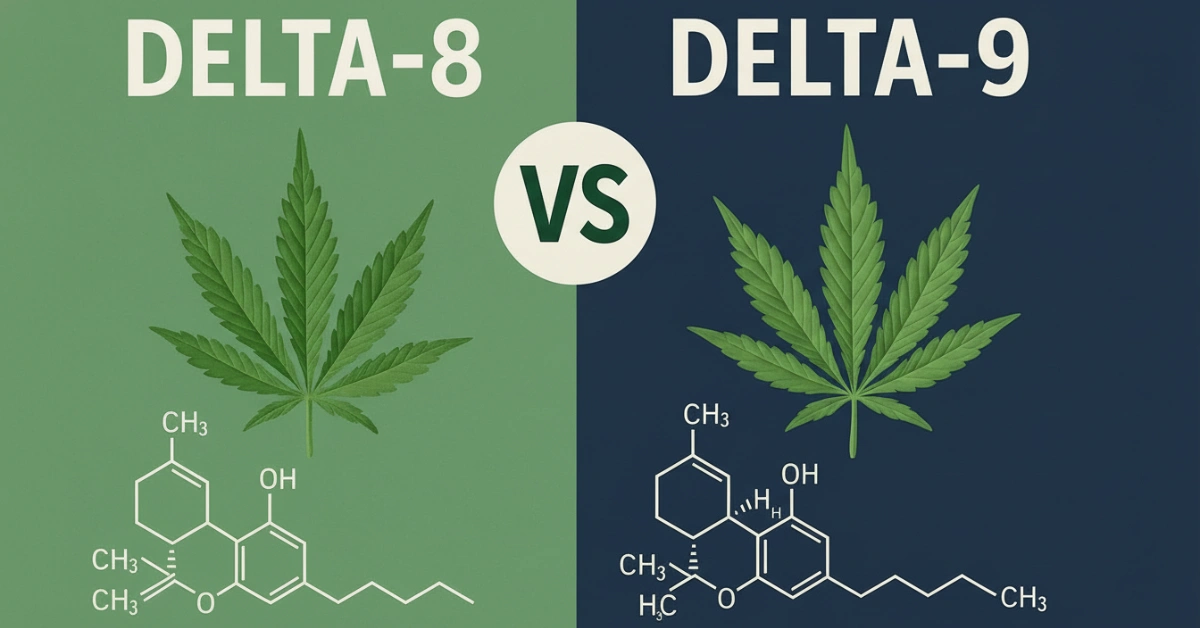
Both delta 8 and delta 9 share the same molecular formula. The key difference is the location of a double bond in their carbon chain.
- Delta 9: Double bond on the 9th carbon chain
- Delta 8: Double bond on the 8th carbon chain
This minor structural shift changes how strongly each compound binds to CB1 receptors in the brain. Delta 9 binds more directly and efficiently to CB1 receptors, which explains its stronger intoxicating effects. Delta 8 binds differently, resulting in reduced psychoactive intensity.
Potency Comparison: How Strong Is Delta 8 vs Delta 9?
Research and consumer reports consistently suggest:
- Delta 8 potency: Approximately 50–66% as strong as delta 9
- Delta 9 potency: Full-strength psychoactive impact
Many users describe delta 8 as calmer, clear-headed, and less overwhelming. While delta 9 is often described as stronger euphoria, greater sensory enhancement, higher likelihood of anxiety at elevated doses. However, both compounds impair coordination, reaction time, and judgment.
Natural Abundance and Production
Delta 9
- Occurs naturally in high concentrations.
- Extracted directly from plant material.
- Concentrates and oils are produced through standard extraction methods.
Delta 8
- Occurs naturally only in trace amounts.
- Most commercial delta 8 is produced by converting hemp-derived CBD through isomerization.
- This chemical conversion process can involve solvents and reagents.
Because delta 8 does not naturally occur in significant quantities, nearly all retail delta 8 products are manufactured rather than directly extracted.
When purchasing these products from reputable retailers, always review third-party lab reports verifying cannabinoid content and residual solvent screening.
Effects Comparison
Feature | Delta 8 | Delta 9 |
Psychoactive Strength | Mild to moderate | Strong |
Relative Potency | 50–66% of D9 | Full potency |
Euphoria | Present, lighter | Strong |
Anxiety Risk | Lower (dose dependent) | Higher at high doses |
Cognitive Impairment | Yes | Yes |
Appetite Stimulation | Reported | Common |
Relaxation | Frequently reported | Common |
A 2022 survey involving over 500 participants found that:
- 71% reported increased relaxation with delta 8
- 68% reported euphoria
- 55% reported pain relief
- 57% used delta 8 as a substitute for delta 9
Despite milder effects, delta 8 still causes intoxication.
Side Effects: What the Data Shows
Both compounds share similar side effect profiles.
Common Side Effects
- Dry mouth
- Red eyes
- Short-term memory disruption
- Increased appetite
- Dizziness
- Anxiety or paranoia
Reported Adverse Events (Delta 8 Specific Data)
Between late 2020 and early 2022:
- The FDA received 100+ adverse event reports related to delta 8.
- Over 50% required hospitalization.
- Poison control centers reported thousands of exposures.
- Approximately 41% involved children.
High-dose edible consumption has been linked to vomiting, hallucinations, tremors, confusion, and loss of consciousness. These safety concerns are primarily linked to unregulated manufacturing and mislabeling.
Safety and Regulation Differences
Delta 9 (State-Regulated Markets)
- Subject to testing for potency
- Screened for heavy metals
- Tested for pesticides
- Regulated packaging standards
Delta 8
- Often falls into a regulatory gray area
- Frequently produced in unlicensed facilities
- May contain residual solvents or byproducts
- No FDA-approved delta 8 products
Because delta 8 products are commonly synthesized, improper manufacturing can result in contamination with reaction byproducts or unknown compounds. Consumers should prioritize brands that provide:
- Full panel Certificates of Analysis (COAs)
- Batch-specific testing
- Transparent ingredient lists
Legal Status: Federal and State Differences
Federal Framework
Under the 2018 Farm Bill, Hemp-derived products containing less than 0.3% delta 9 THC by dry weight are federally legal.
Delta 9
- Illegal federally if exceeding 0.3% threshold.
- Legal in some states for recreational or medical use.
- Regulated in states with established programs.
Delta 8
- Derived from hemp, often marketed as federally compliant.
- Some states have banned or restricted delta 8 specifically.
- The DEA has indicated that synthetically derived THC may be considered controlled.
Laws vary widely by state and continue to evolve.
Drug Testing: Will Delta 8 or Delta 9 Show Up?
Yes. Standard drug tests detect THC metabolites, not the specific isomer. Both delta 8 and delta 9 break down into similar metabolites, meaning delta 8 can trigger a positive THC result, delta 9 will trigger a positive result, and tests generally cannot distinguish between the two. If drug testing is a concern, avoid both.
Potential Benefits
Delta 9 (Research-Supported Uses)
Prescription synthetic forms of delta 9 are FDA-approved for chemotherapy-related nausea and appetite stimulation in AIDS-related anorexia. Research also examines its potential role in chronic pain management, sleep disturbances, and PTSD-related symptoms
Delta 8
Research remains limited. Survey-based studies suggest relaxation, reduced anxiety compared to delta 9, and pain perception support. More clinical trials are required to confirm safety and efficacy.
Product Forms Available
Both compounds are sold in:
- Gummies
- Oils and tinctures
- Vape cartridges
- Capsules
- Infused beverages
- Topical balms
Consumers seeking controlled dosing often prefer delta 8 gummies because of predictable milligram labeling. Those wanting faster onset may opt for vape formats. Always review serving size and potency before use.
Which One Is Stronger?
Delta 9 is stronger in nearly all measurable categories:
- Psychoactive intensity
- CB1 receptor binding strength
- Impairment level
Delta 8 may feel smoother, but smoother does not mean risk-free.
Key Differences at a Glance
Category | Delta 8 | Delta 9 |
Double Bond Location | 8th carbon | 9th carbon |
Natural Abundance | Trace | High |
Production | Mostly converted from CBD | Extracted directly |
Relative Potency | 50–66% | Full |
Federal Status | Gray area | Restricted above 0.3% |
Drug Test Risk | Yes | Yes |
FDA Approval | None | Synthetic forms approved (prescription only) |
Final Thought
The difference between delta 8 and delta 9 lies in potency, structure, production method, and regulatory oversight. Delta 9 is stronger and naturally abundant, while delta 8 is milder but usually synthesized from hemp-derived CBD. Both compounds are intoxicating. Both can impair cognition. Both can trigger drug tests.
For consumers purchasing hemp-derived products online, the most important factors are verified lab testing, transparent sourcing, accurate labeling, and legal compliance. Understanding these distinctions allows buyers to select products responsibly and in alignment with their personal needs and local regulations.
What is the main difference between delta 8 and delta 9?
The primary difference is the position of the double bond in their chemical structure, which affects potency. Delta 9 produces stronger psychoactive effects.
Is delta 8 safer than delta 9?
Delta 8 is often described as milder, but it is not automatically safer. Lack of regulation and synthetic production introduce potential contamination risks.
Does delta 8 get you high?
Yes. Although less potent, delta 8 still produces intoxicating effects and impairs judgment.
Can delta 8 or delta 9 cause a failed drug test?
Both can trigger a positive THC result because drug tests detect metabolites rather than specific isomers.
Why is delta 8 legal in some states?
It is often derived from hemp containing less than 0.3% delta 9 THC, which aligns with federal hemp guidelines. However, many states have enacted restrictions.
Which lasts longer in the body?
Detection time depends on dose, frequency, and metabolism. Both can remain detectable for days to weeks in urine tests.