

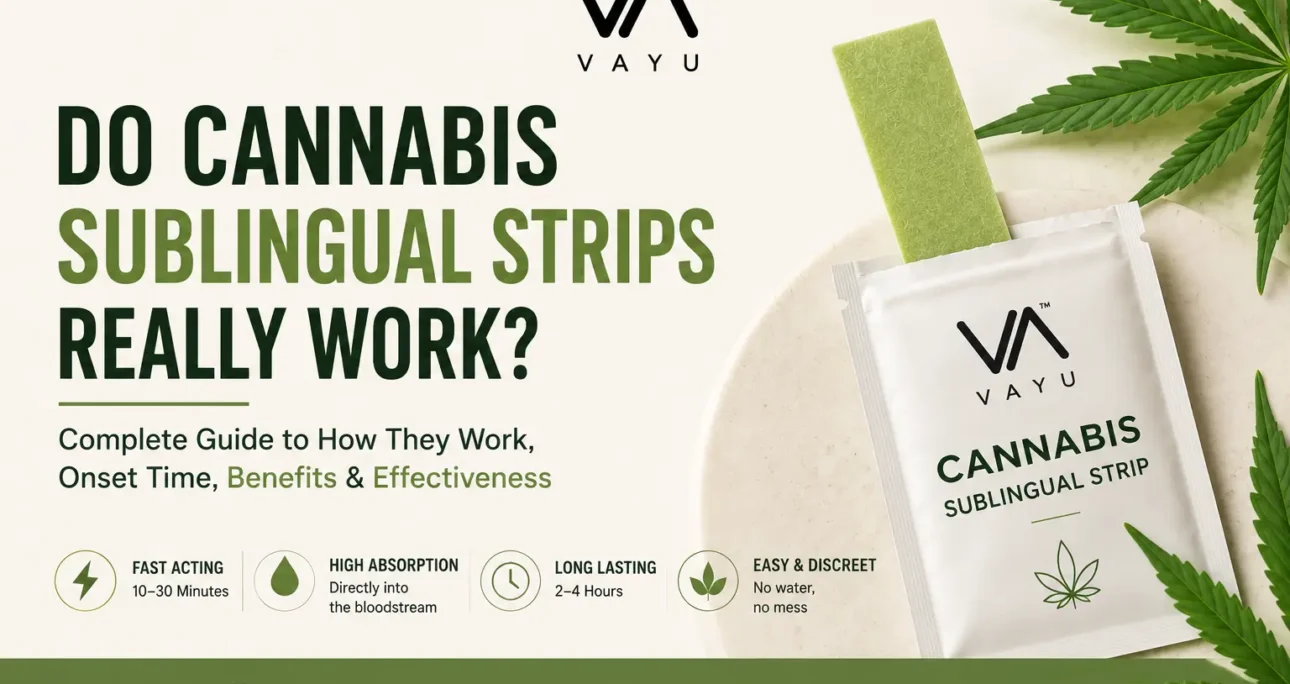
Sublingual strips have become a modern method for using cannabinoids without inhalation or traditional edible formats. These thin dissolvable strips are designed to be placed under the tongue, where they break down and release active compounds into the body. Their popularity comes from fast action, simple use, and consistent dosing.
Many users prefer this method because it does not rely on digestion. Instead, it uses direct absorption through oral tissues. This creates a different experience compared to slow digestive processing methods. Over time, sublingual strips have gained attention for their speed and efficiency. They are now commonly used in wellness products that contain cannabinoids in measured amounts.
What Sublingual Strips Are
Sublingual strips are thin film-like layers infused with cannabinoids. They are designed to dissolve quickly when placed under the tongue. Once placed, they stick to the moist surface and begin releasing active compounds.
The strip usually contains a controlled dose. This allows consistent intake without measuring liquids or handling complex devices. The key purpose of these strips is fast absorption. They are made to avoid digestion and instead use the oral mucosa for entry into the bloodstream.
How Sublingual Absorption Works
The area under the tongue contains a dense network of blood vessels. This area is known as the sublingual mucosal layer. It is highly absorbent and allows small molecules to pass directly into circulation.
When a cannabinoid strip dissolves under the tongue, the active compounds move through this membrane. They enter the bloodstream without passing through the stomach or liver first. This process is known as direct mucosal absorption. It reduces breakdown of cannabinoids before they reach circulation.
Because digestion is avoided, the effect becomes faster and more efficient. The body receives a higher portion of active compounds compared to oral ingestion methods.
Why Sublingual Strips Work Effectively
Sublingual strips work due to three main reasons: direct absorption, higher efficiency, and controlled release. Direct absorption allows cannabinoids to enter the bloodstream quickly. This bypasses enzymatic breakdown that normally occurs during digestion.
Higher efficiency comes from reduced loss of active compounds. In digestion-based methods, a portion of cannabinoids becomes inactive before reaching circulation. Sublingual delivery reduces this loss.
Controlled release happens as the strip dissolves gradually. This supports steady absorption over a short period instead of a sudden spike. Together, these factors make the method effective for predictable cannabinoid delivery.
Onset Time and Duration
Sublingual strips are known for relatively fast onset. Effects usually begin within 10 to 30 minutes depending on body response and dosage strength. This is faster than digestion-based methods, which often require longer processing time before effects begin.
The duration of effects generally ranges from 2 to 4 hours. This can vary based on metabolism, dosage, and cannabinoid concentration. The experience is often described as steady because absorption happens gradually through the oral tissue rather than a single digestive release.
Comparison of Consumption Methods
Method Type | Absorption Route | Onset Time | Duration | Efficiency Level |
Sublingual strips | Oral mucosa under tongue | 10–30 minutes | 2–4 hours | High |
Edible forms | Digestive system | 60–120 minutes | 4–8 hours | Moderate |
Inhalation methods | Respiratory system | 1–5 minutes | 1–3 hours | High but short |
This comparison shows that sublingual strips provide a balance between speed and duration. They are faster than digestion-based methods and more stable than rapid inhalation effects.
Bioavailability of Sublingual Strips
Bioavailability refers to how much of a substance actually reaches the bloodstream.
Sublingual strips offer higher bioavailability compared to digestion-based methods because they avoid first-pass breakdown in the liver. This means more cannabinoids remain active when entering circulation.
In digestion-based formats, a portion of cannabinoids is lost during metabolic processing. Sublingual absorption reduces this loss and increases overall efficiency. This higher absorption rate is one of the main reasons sublingual strips are considered effective.
Consistency in Experience
Sublingual strips provide a more predictable experience compared to digestive methods. This is because absorption happens in a controlled and direct manner. Each strip contains a fixed amount of cannabinoids. This helps reduce variation in intake.
The steady absorption process also prevents sudden spikes in concentration. This creates a smoother and more balanced experience over time. Consistency is one of the strongest advantages of this delivery method.
Advantages of Sublingual Strips
Sublingual strips offer several practical advantages due to their structure and absorption method.
- Fast absorption through oral tissues
- No need for digestion or food interaction
- Controlled and fixed dosing format
- Portable and easy to carry
- No equipment required
- Discreet usage without strong odor
- More stable cannabinoid delivery
These features make them suitable for users who prefer simple and efficient cannabinoid intake methods.
Factors That Influence Effectiveness
The effectiveness of sublingual strips depends on several biological and product-related factors.
- Body metabolism plays a role in how quickly cannabinoids are processed.
- Dosage strength affects intensity and duration of effects.
- Placement under the tongue is important for proper absorption through mucosal tissue.
- Dissolving time also matters because longer contact increases absorption efficiency.
All these factors work together to determine overall performance.
Why Sublingual Strips Are Increasing in Use
Sublingual strips have become more common due to convenience and performance balance. They combine fast onset with moderate duration, making them suitable for controlled cannabinoid intake.
Their simple design removes the complexity of measuring or preparing doses. Each strip delivers a pre-measured amount, reducing variability. The shift toward smoke-free and discreet cannabinoid formats has also contributed to their popularity.
Summary of Effectiveness
Sublingual strips work by using direct absorption through the tissues under the tongue. This method bypasses digestion and allows cannabinoids to enter the bloodstream more efficiently.
The result is a faster onset, improved consistency, and higher absorption compared to traditional oral methods. Their effectiveness comes from a combination of biological absorption efficiency and controlled dosing structure.
Frequently Asked Questions
Do sublingual strips really work?
Yes, they work by letting cannabinoids absorb under the tongue. This gives faster results compared to digestion-based methods.
How fast do sublingual strips work?
They usually start working within 10 to 30 minutes. This depends on body response and dose.
Are they better than edibles?
They are faster than edibles. Edibles take longer because they go through digestion.
How long do effects last?
Effects usually last around 2 to 4 hours. This can vary by dose and body type.
What makes them effective?
Direct absorption through the mouth makes them effective. It allows quicker entry into the bloodstream.
Shop VAYU - Lab-Tested, Hemp-Derived, 21+
Every VAYU product is third-party lab-tested with a published Certificate of Analysis. Explore THCA flower, concentrates, vapes, gummies and pre-rolls.

