

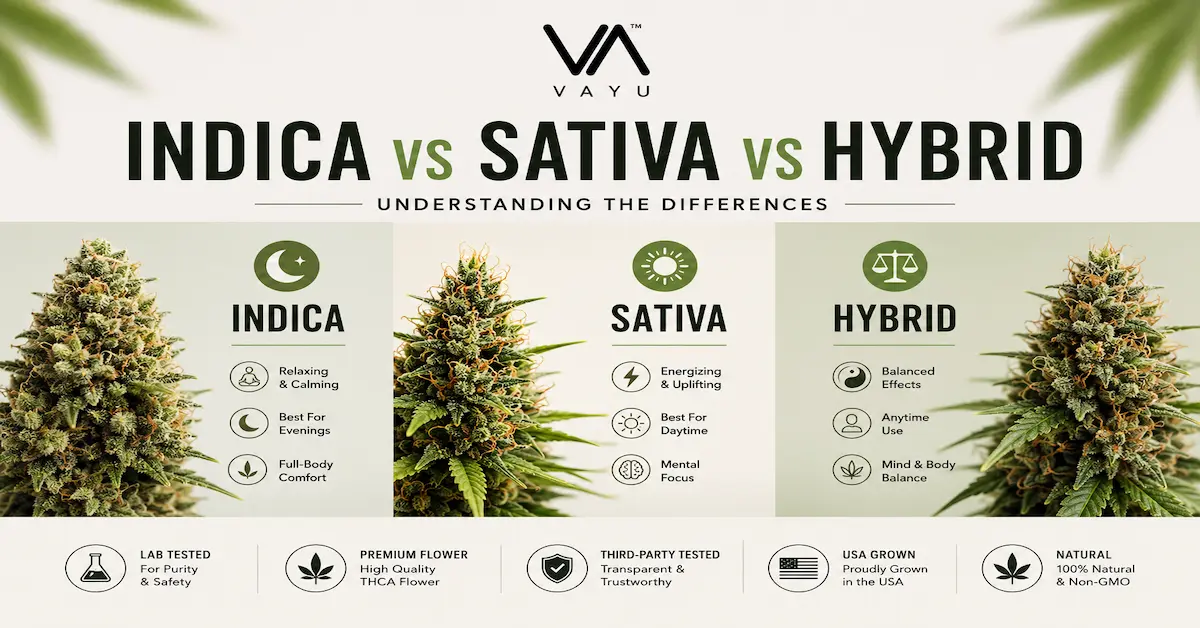
Walk into any dispensary or browse premium THCA flower online and you will usually see products grouped into three main categories: indica, sativa, and hybrid. These labels help people quickly understand the general experience a strain may offer.
For years, indica strains were associated with deep relaxation, while sativa strains were linked with energy and creativity. Hybrids were viewed as a mix of both. Today, the picture is more advanced. Growers now pay close attention to cannabinoid levels, terpene profiles, genetics, and cultivation methods, which means two strains in the same category can still feel very different.
Even so, these categories remain useful for beginners and experienced consumers alike. They provide a simple starting point when choosing flowers, vapes, concentrates, or infused products. This guide breaks down the differences between indica, sativa, and hybrid strains, along with the role of cannabinoids, terpenes, plant structure, and common effects.
Quick Comparison
Feature | Indica | Sativa | Hybrid |
Typical Feel | Relaxing and calming | Energizing and uplifting | Balanced or mixed |
Best Time | Evening or nighttime | Daytime or social settings | Depends on dominance |
Plant Shape | Short and bushy | Tall and thin | Mixed traits |
Common Terpenes | Myrcene, caryophyllene | Limonene, terpinolene | Varies by genetics |
Popular Uses | Relaxation, winding down | Focus, creativity, activity | Flexible effects |
Growth Style | Faster flowering | Longer flowering cycle | Depends on parent strains |
Body Sensation | Full-body relaxation | More cerebral effects | Combination of both |
Common Consumer Type | Evening users | Daytime users | All-around users |
What Are Indica, Sativa, and Hybrid Strains?
These terms originally described the physical structure and growing behavior of different plants. Over time, they also became linked with certain effects. Today, the categories still matter, but they are no longer the only thing that determines how a strain feels.
Cannabinoids and terpenes now play a major role in the overall experience. Even so, most consumers still begin their search by asking a simple question: Do I want something relaxing, uplifting, or balanced? That is where indica, sativa, and hybrid classifications remain useful.
Understanding Indica Strains
Indica strains are commonly associated with calmness, body comfort, and nighttime use. These varieties are often chosen by people who want to slow down after a long day. Traditional indica plants usually grow shorter and wider. They develop thick branches, dense buds, and broad leaves. Because of their compact structure, they are often easier to grow indoors.
Many indica-dominant strains contain terpene profiles rich in myrcene and caryophyllene. These compounds are frequently connected with relaxing effects and heavier body sensations.
Common Characteristics of Indica Strains
- Dense and compact buds
- Shorter flowering cycle
- Broad leaves
- Strong body sensation
- Often linked with nighttime use
Commonly Reported Effects
Many users describe indica strains as the following:
- Relaxing
- Grounding
- Physically calming
- Heavy or soothing
- Sleep-friendly
Not every indica feels the same. Some are deeply sedating, while others offer a lighter and smoother effect.
Popular Indica Strains
Several classic indica varieties continue to remain popular among experienced consumers:
- Northern Lights
- Bubba Kush
- Granddaddy Purple
- Purple Punch
- Ice Cream Cake
- Afghan Kush
Each strain has its own terpene balance and cannabinoid profile. That is why two indica products may deliver very different experiences.
Understanding Sativa Strains
Sativa strains are usually connected with mental stimulation, energy, and creative focus. Many people prefer these varieties during the daytime. Traditional sativa plants grow taller and thinner than indica varieties. They often take longer to flower and develop narrower leaves.
Sativa-leaning strains commonly contain terpene combinations that include limonene or terpinolene. These compounds are often associated with uplifting and mentally active effects.
Common Characteristics of Sativa Strains
- Taller plant structure
- Narrow leaves
- Longer flowering cycle
- More cerebral sensation
- Often preferred during daytime hours
Commonly Reported Effects
Consumers often describe sativa strains as the following:
- Energetic
- Motivating
- Creative
- Social
- Mentally stimulating
Some people enjoy sativa strains before physical activity, creative work, social events, or outdoor experiences.
Popular Sativa Strains
Well-known sativa varieties include:
- Sour Diesel
- Durban Poison
- Jack Herer
- Green Crack
- Super Lemon Haze
- Strawberry Cough
Again, effects vary depending on cannabinoid percentages, terpene combinations, tolerance level, and dosage.
Understanding Hybrid Strains
Hybrid strains combine genetics from both indica and sativa plants. In today’s market, most products are technically hybrids in some form. Growers create hybrids to target specific experiences. Some hybrids lean heavily toward indica effects, while others lean more toward sativa characteristics. You will often hear three terms when discussing hybrids:
- Indica-dominant hybrid
- Sativa-dominant hybrid
- Balanced hybrid
This gives consumers a better idea of what to expect.
Why Hybrids Are So Popular
Hybrids allow growers to combine desired traits from multiple parent strains. That can include:
- Flavor profile
- Aroma intensity
- Flower structure
- Cannabinoid ratios
- Terpene balance
- Effect profile
Because of this flexibility, hybrid strains dominate many modern dispensary menus.
Commonly Reported Hybrid Effects
Depending on genetics, hybrids may feel:
- Relaxing but mentally alert
- Calm without heavy sedation
- Uplifting with body comfort
- Balanced and versatile
Some hybrids feel energizing at lower doses and more calming at higher amounts.
Popular Hybrid Strains
Common hybrid favorites include:
- Blue Dream
- Wedding Cake
- Gelato
- OG Kush
- Pineapple Express
- GMO Cookies
- GG4
Why the Old Labels Are No Longer Perfect
For many years, consumers relied almost entirely on indica and sativa labels. Modern research now shows that these categories alone cannot fully predict effects. Two products with similar labels may produce very different experiences because the real influence often comes from:
- Cannabinoid percentages
- Terpene combinations
- Cultivation methods
- Harvest timing
- Personal body chemistry
- Tolerance level
That is why many experienced consumers now pay close attention to lab reports and terpene profiles.
Cannabinoids Explained
Cannabinoids are naturally occurring compounds found in hemp flower. These compounds interact with the body’s internal systems and influence the overall experience. The most discussed cannabinoids include the following:
- THC: THC is commonly linked with euphoric and psychoactive effects. Products with higher THC percentages are usually stronger and more intense.
- CBD: CBD is non-intoxicating and often associated with calm, balance, and relaxation.
- THCA: THCA exists in raw flower before heat is applied. Once heated, it converts into THC.
- CBG: CBG is gaining attention for its smoother and more focused experience.
- CBN: CBN is often linked with nighttime products and deeper relaxation.
Most modern strains contain a mix of multiple cannabinoids rather than a single dominant compound.
The Role of Terpenes
Terpenes are aromatic compounds responsible for the scent and flavor of flower. They also help shape the overall experience. Many consumers now believe terpene profiles matter just as much as cannabinoid percentages.
Common Terpenes and Their Associations
Terpene | Common Aroma | Often Linked With |
Myrcene | Earthy and musky | Relaxation and body heaviness |
Limonene | Citrus | Uplifting mood and energy |
Caryophyllene | Pepper and spice | Warm and calming effects |
Pinene | Pine | Alertness and clarity |
Terpinolene | Herbal and floral | Creative and active feeling |
Linalool | Lavender-like | Calm and soothing sensation |
A strain rich in limonene may feel bright and active, even if it is labeled as an indica. That is one reason why terpene analysis has become so important.
Indica vs Sativa: Physical Differences
The physical structure of the plants also differs significantly.
Indica Plant Traits
- Short and dense
- Wider leaves
- Faster flowering
- Better suited for colder climates
- Compact growth pattern
Sativa Plant Traits
- Tall and narrow
- Thin leaves
- Longer flowering cycle
- Better suited for warmer climates
- Larger vertical growth
Hybrid Plant Traits
Hybrid appearance depends on parent genetics. Some look more like indica plants, while others resemble sativa varieties.
How Effects Can Change From Person to Person
No strain affects everyone the same way. A product that feels deeply calming for one person may feel mentally stimulating for another. Several factors influence the outcome:
- Body chemistry
- Experience level
- Tolerance
- Consumption amount
- Mood and environment
- Terpene sensitivity
That is why strain reviews are helpful but never absolute.
Choosing Between Indica, Sativa, and Hybrid
The best choice depends on the experience you want.
Choose Indica If You Prefer:
- Quiet evenings
- Physical relaxation
- A slower pace
- Movie nights
- End-of-day use
Choose Sativa If You Prefer:
- Daytime activity
- Creative focus
- Social environments
- Outdoor experiences
- Energetic sessions
Choose Hybrid If You Prefer:
- Flexible effects
- Balanced experiences
- Moderate intensity
- A mix of mind and body effects
- Variety and experimentation
Indica-Dominant vs Sativa-Dominant Hybrids
Many modern strains sit somewhere in the middle.
Indica-Dominant Hybrids
These hybrids usually offer stronger body effects with lighter mental stimulation. Common examples include:
- Wedding Cake
- GMO Cookies
- Gelato
- Dosidos
Sativa-Dominant Hybrids
These strains often provide uplifting mental effects while keeping some body relaxation. Popular examples include:
- Blue Dream
- Pineapple Express
- Sour Diesel crosses
- Tangie hybrids
Balanced hybrids aim to deliver both experiences evenly.
Why Terpene Profiles Matter More Than Labels
Modern consumers are moving beyond simple strain categories. Instead of choosing products only by indica or sativa labels, many shoppers now look for terpene combinations that match their goals. For example:
- High myrcene products are often selected for relaxation.
- Limonene-rich strains are commonly associated with mood elevation.
- Pinene-heavy flower is sometimes preferred for daytime clarity.
This approach gives consumers more control over the experience.
Potency Is Not Everything
Many people assume higher THC percentages automatically mean better flower. That is not always true. A balanced product with strong terpene content can sometimes feel smoother, richer, and more enjoyable than an extremely high-THC strain.
Flavor, aroma, freshness, cultivation quality, and terpene retention all influence the final experience. That is why experienced consumers often focus on the full profile rather than only the THC number.
Common Myths About Weed Types
Myth 1: All Indicas Cause Sleepiness
Some indica strains feel calm without being overly heavy.
Myth 2: All Sativas Increase Energy
Certain sativa strains may feel mellow depending on their terpene profile.
Myth 3: Hybrids Are Always Balanced
Some hybrids strongly lean toward one side.
Myth 4: THC Alone Determines Effects
Terpenes and minor cannabinoids also shape the experience.
Myth 5: Stronger Always Means Better
Higher potency does not automatically mean a better experience.
Beginner Tips for Choosing a Strain
If you are new to THCA flower or premium hemp products, start simple.
Helpful Starting Tips
- Begin with lower amounts
- Pay attention to terpene profiles
- Track strains you enjoy
- Avoid chasing only THC percentages
- Choose products from trusted sources
It also helps to understand whether you prefer body-heavy or mentally active effects.
Popular Flavor Profiles Across Different Strains
Flavor plays a huge role in strain selection.
Common Flavor Notes in Indica Strains
- Earthy
- Sweet
- Grape-like
- Spicy
- Creamy
Common Flavor Notes in Sativa Strains
- Citrus
- Tropical fruit
- Pine
- Herbal
- Sour diesel not
Common Flavor Notes in Hybrids
- Dessert-inspired flavors
- Fuel notes
- Candy sweetness
- Fruit blends
- Creamy citrus profiles
Terpenes are responsible for most of these aromas and flavors.
The Rise of Modern Hybrid Genetics
Pure indica and pure sativa genetics are becoming less common in the modern market. Today, many top-selling strains are heavily crossbred hybrids designed to deliver:
- Better flavor
- Higher resin production
- Stronger aroma
- Improved bag appeal
- More targeted effects
This has changed the way many people shop for flower.
Consumers now focus more on the total experience rather than old-school strain labels alone.
Which Weed Type Is Best?
There is no single best option. The ideal strain depends on:
- Your tolerance
- Preferred intensity
- Time of day
- Desired mood
- Flavor preference
- Personal body chemistry
Some people prefer calming indica-heavy flower at night and uplifting sativa-dominant products during the day. Others enjoy balanced hybrids for nearly every situation. The best approach is to experiment slowly and learn which terpene and cannabinoid profiles work best for you.
Final Thoughts
‘Indica’, ‘sativa’, and ‘hybrid’ labels still provide a useful starting point when choosing flower. They help consumers quickly understand whether a product may feel relaxing, energizing, or balanced. At the same time, modern strain selection has become much more advanced. Cannabinoids, terpene profiles, genetics, cultivation quality, and personal tolerance all shape the final experience.
Understanding these factors makes it easier to choose products that fit your lifestyle and preferences. Whether you enjoy indica-heavy relaxation, sativa-style energy, or balanced hybrid effects, learning how cannabinoids and terpenes work together can completely change the way you shop for premium flower.
Frequently Asked Questions
What is the main difference between indica and sativa strains?
Indica strains are generally linked with calming body effects, while sativa strains are more commonly associated with uplifting and mentally active experiences. Terpenes and cannabinoids also influence the final result.
Are hybrid strains stronger than indica or sativa?
Not necessarily. Hybrid strains simply combine genetics from both categories. Their strength depends on cannabinoid levels, terpene content, and cultivation quality.
Do terpenes really affect how a strain feels?
Yes. Terpenes help shape aroma, flavor, and overall experience. Compounds like myrcene, limonene, and pinene are commonly linked with different sensations.
Is THC percentage the most important factor?
THC matters, but it is not the only factor. Many consumers now focus on the complete cannabinoid and terpene profile instead of chasing the highest THC number.
Are pure indica and pure sativa strains still common?
Pure genetics are less common today because many modern strains are crossbred hybrids. Most products on the market contain mixed lineage.
Which strain type is best for beginners?
Balanced hybrids or lower-potency products are often easier for beginners because they tend to provide a smoother and more moderate experience.
Why do the same strains affect people differently?
Body chemistry, tolerance, mood, dosage, and terpene sensitivity all influence how a person experiences a strain.
What are indica-dominant and sativa-dominant hybrids?
These hybrids lean more heavily toward one side. Indica-dominant hybrids usually feel more calming, while sativa-dominant hybrids often feel more uplifting and active.
Shop VAYU - Lab-Tested, Hemp-Derived, 21+
Every VAYU product is third-party lab-tested with a published Certificate of Analysis. Explore THCA flower, concentrates, vapes, gummies and pre-rolls.

