

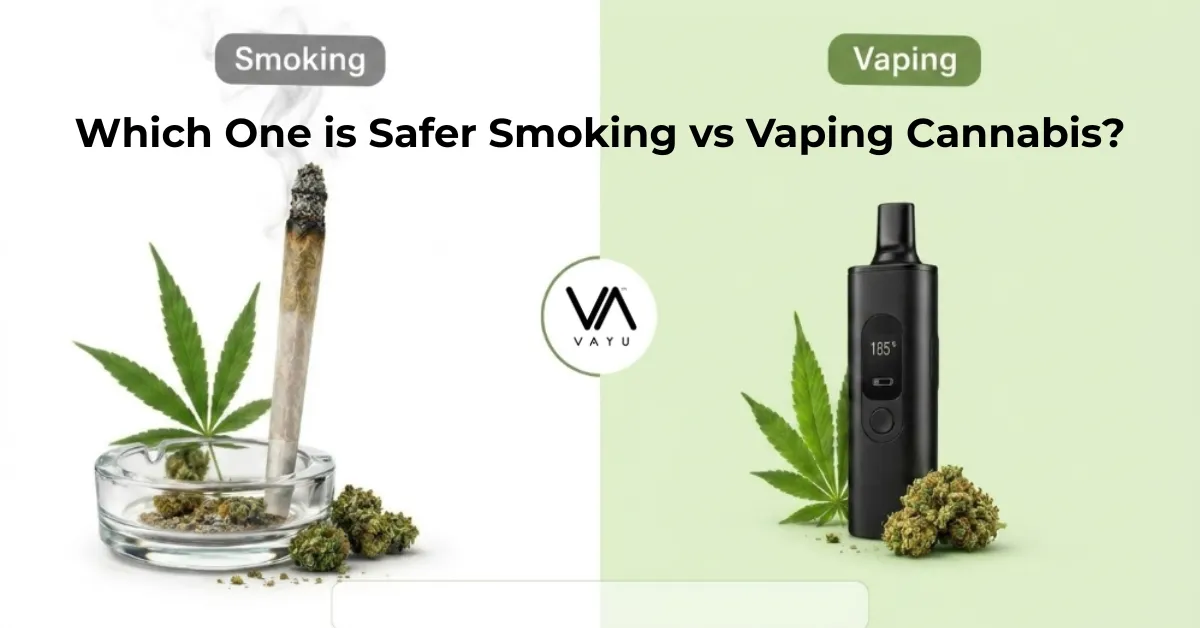
Understanding the safety differences between smoking and vaping cannabis is important for making informed decisions about inhalation methods. Both approaches deliver active compounds such as cannabinoids into the body, but they do so in very different ways, which directly impacts the level of exposure to harmful by-products and overall health risks.
Smoking involves burning plant material at high temperatures, while vaping heats it to release active compounds without full combustion. This difference is the key factor that separates the two methods in terms of safety profile. However, neither method is completely risk-free, and both can have short-term and long-term effects on respiratory and cardiovascular health.
How Smoking and Vaping Work
Smoking relies on combustion, which means the plant material is burned and the resulting smoke is inhaled. This process produces not only active compounds but also toxic byproducts such as tar, carbon monoxide, and other irritants that can affect lung tissue over time.
Vaping, on the other hand, heats cannabis at controlled temperatures below combustion levels. This creates an aerosol rather than smoke. The absence of burning reduces exposure to some harmful substances, but the vapor may still contain ultrafine particles, residual solvents, or trace metals depending on product quality.
Health Impact Comparison
Factor | Smoking | Vaping |
Heat Process | Combustion (burning) | Controlled heating (no burning) |
Harmful Byproducts | High (tar, carbon monoxide, carcinogens) | Lower but still present (aerosols, particles) |
Lung Irritation | More severe over time | Moderate, depending on product quality |
THC/Cannabinoid Delivery | Moderate levels | Often higher concentration per inhale |
Dosage Control | Less precise | More controlled dosing possible |
Risk of Overconsumption | Lower | Higher due to concentrated delivery |
Product Safety Concerns | Combustion-related toxins | Possible additives, contaminants, device risks |
Smoking: Risk Profile and Effects
Smoking directly exposes the lungs to burned plant material, which introduces harmful toxins and irritants. Over time, this can contribute to respiratory discomfort, reduced lung efficiency, and persistent coughing in frequent users.
Respiratory Impact of Smoking
Repeated exposure to smoke can increase inflammation in airways and reduce overall lung comfort. This is primarily due to continuous inhalation of combustion byproducts that the lungs must filter out.
Although smoking delivers a slower and less concentrated intake of active compounds compared to vaping, the trade-off is higher exposure to harmful smoke elements.
Vaping: Risk Profile and Effects
Vaping eliminates combustion, which reduces exposure to smoke-related toxins. However, it introduces other concerns related to potency and product formulation. Many vape products contain concentrated extracts, meaning a higher amount of active compounds can be delivered in a single inhale. This increases the likelihood of strong immediate effects.
Product Quality and Safety Concerns
The safety of vaping heavily depends on product regulation and quality control. Poorly manufactured products may contain residual solvents, additives, or trace metals that can impact respiratory health. Device overheating or malfunction can also increase exposure risks.
Why Both Methods Carry Different Types of Risk
From a harm-exposure perspective, smoking and vaping affect the body through different pathways:
- Smoking increases toxin exposure from combustion
- Vaping increases potency-related physiological impact
This means safety is not one-dimensional. One method primarily affects the lungs through irritation, while the other influences the body more through concentrated delivery of active compounds. Neither method removes risk completely, and both depend heavily on usage frequency, product quality, and individual sensitivity.
Short-Term and Long-Term Effects
Both methods can produce immediate effects within minutes, typically peaking shortly after use. However, their long-term impact differs mainly due to exposure type.
Smoking tends to have a more consistent pattern of respiratory irritation due to repeated inhalation of burned material. Vaping may reduce some of this irritation but can still affect lung function, particularly with frequent or high-potency use.
Neither method eliminates the possibility of dependence, cognitive changes, or cardiovascular strain when used regularly or in high amounts.
Temperature and Delivery Differences
The method of delivery also influences how active compounds behave inside the body. Smoking exposes material to extremely high temperatures, while vaping uses lower, controlled heating levels.
Lower heat methods tend to preserve more volatile compounds, while higher heat combustion destroys or alters many of them. This difference explains why vapor may feel smoother but more concentrated, while smoke feels harsher but less potent per inhale.
Safer Use Perspective
From a harm-reduction standpoint, vaping is generally associated with reduced exposure to toxic combustion byproducts. However, this does not make it completely safe due to concentration levels and product variability.
Smoking, while more traditional and widely used, introduces higher levels of respiratory toxins due to burning. Over time, this can increase lung irritation and breathing-related complications. Both methods carry inherent risks, and safety largely depends on frequency, product quality, and individual sensitivity.
Key Takeaway
Smoking increases exposure to harmful combustion byproducts, while vaping reduces some of these risks but may increase potency-related effects and introduce product-based uncertainties. Neither method is risk-free, and both should be approached with awareness of their health implications.
Is vaping safer than smoking cannabis?
Vaping is generally considered to expose the lungs to fewer combustion toxins compared to smoking. However, it can still carry health risks due to high potency and product quality concerns.
Does smoking cannabis damage the lungs more than vaping?
Smoking produces tar, carbon monoxide, and other harmful byproducts from burning plant material, which can irritate the lungs more than vapor. Vaping avoids combustion but is not completely free from respiratory impact.
Can vaping lead to stronger effects than smoking?
Yes, vaping often delivers higher concentrations of active compounds per inhale, which can lead to stronger and faster effects compared to smoking.
Are both smoking and vaping harmful in the long run?
Both methods can affect respiratory and overall health over time. Smoking is linked more strongly with chronic lung irritation, while vaping carries risks related to potency, additives, and device safety.
What is the main safety difference between smoking and vaping?
The key difference is combustion. Smoking involves burning material and producing toxic smoke, while vaping heats it to create vapor with fewer combustion byproducts.
Shop VAYU - Lab-Tested, Hemp-Derived, 21+
Every VAYU product is third-party lab-tested with a published Certificate of Analysis. Explore THCA flower, concentrates, vapes, gummies and pre-rolls.

