

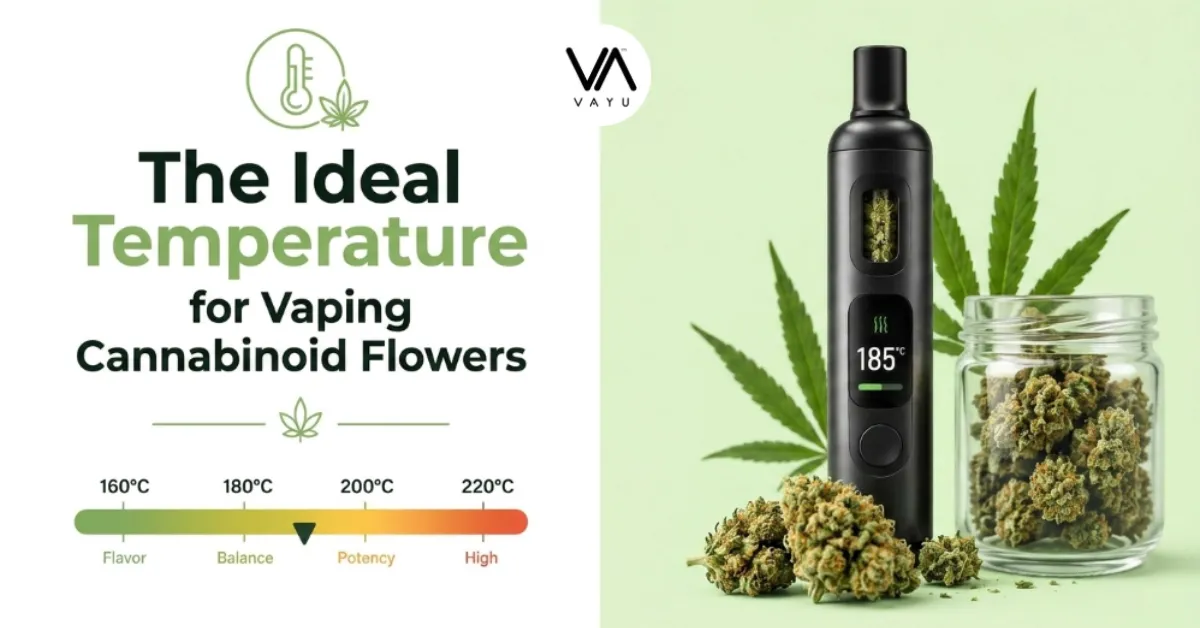
Temperature plays a major role in the overall vaping experience. Flavor, vapor density, smoothness, and cannabinoid activation all depend on the heat setting being used. Even high-quality flower can feel harsh or ineffective if the temperature is too low or too high.
Many people assume stronger heat always creates a better experience, but that is not always true. Lower temperatures preserve flavor and delicate terpene profiles, while higher temperatures produce thicker vapor and stronger cannabinoid extraction. The best experience usually comes from finding a balance between both.
For most dry flower vaporizers, the ideal range falls between 350°F and 390°F (177°C–199°C). This range delivers balanced vapor production while protecting the natural flavor compounds inside the flower.
Why Temperature Matters in Flower Vaporization
Every cannabinoid and terpene reacts differently to heat. Some compounds activate at lower temperatures, while others require more heat before they fully release into vapor.
Unlike combustion, vaporization heats flower gradually without directly burning it. This process allows users to enjoy cannabinoids and terpenes with better control over flavor and vapor quality.
When temperatures remain too low, vapor may feel thin and weak because not enough compounds are activated. When temperatures become too high, sensitive terpenes begin degrading quickly, causing harsher vapor and reduced flavor quality. This is why precise temperature control has become one of the most important features in modern vaporizers.
The Ideal Temperature Range for Most Users
Most users prefer medium temperature settings because they balance flavor, vapor density, and cannabinoid activation. This range usually starts around 350°F and extends to about 390°F.
At these temperatures, terpenes remain noticeable, vapor feels smooth instead of harsh, cannabinoids activate more effectively, sessions feel balanced and controlled, and flower extracts evenly without burning. This range works well for both beginners and experienced users because it provides a fuller experience without excessive heat.
Understanding Different Temperature Ranges
Different temperature ranges produce different effects and vapor characteristics. The right setting depends on what someone wants from the session.
Temperature Range | Experience | Vapor Quality | Common Preference |
320°F–350°F | Light and flavorful | Smooth and cool | Daytime sessions |
350°F–390°F | Balanced and full-spectrum | Rich and comfortable | Everyday use |
390°F–430°F | Stronger extraction | Dense and warmer | Evening sessions |
Low Temperature Vaping (320°F–350°F)
Lower temperatures focus heavily on terpene preservation. Terpenes are aromatic compounds responsible for the scent and flavor profile of the flower. Citrus, pine, fruity, herbal, and floral notes become much more noticeable at lower heat settings.
The vapor also feels smoother and cooler on the throat. Many people who are sensitive to harsh vapor prefer this range because coughing and throat irritation become less common. Lower temperatures are often associated with better flavor clarity, milder vapor production, smooth airflow, reduced harshness, and more controlled sessions.
This range is popular among users who value taste and lighter daytime sessions. However, lower temperatures may not fully extract all cannabinoids from the flower. Some people feel the effects are gentler and less intense compared to higher settings.
Medium Temperature Vaping (350°F–390°F)
This range is considered the sweet spot for dry flower vaping. It creates a balanced combination of flavor, cannabinoid activation, and vapor production. Most cannabinoids become active within this range, including CBD and CBN. Vapor becomes fuller and warmer while still maintaining terpene quality.
For many users, medium temperatures provide the best overall experience because sessions feel smooth without sacrificing vapor density. This range is commonly preferred because it offers better cannabinoid activation, stronger vapor production, balanced flavor retention, comfortable vapor temperature, and consistent extraction.
Many portable and desktop vaporizers are specifically optimized around this range because it works well for most flower types.
High Temperature Vaping (390°F–430°F)
Higher temperatures create thicker vapor and stronger cannabinoid extraction. The flower becomes darker faster because more compounds are being released during the session.
Some users prefer this range for evening use because the vapor feels heavier and more intense. However, flavor quality begins decreasing as temperatures rise because delicate terpenes degrade more quickly. At higher temperatures vapor becomes denser, cannabinoid extraction increases, flavor becomes less noticeable, vapor feels hotter, and harshness may increase
Going above 430°F is generally not recommended because combustion may begin occurring. Once combustion starts, the vaporizer behaves more like smoking rather than vaporizing.
Pain Medications and Sedation Risks
Prescription pain medications and cannabinoids may both affect the central nervous system. When used together, they may intensify sedation and slow physical response times. This combination may increase the risk of excessive drowsiness, poor coordination, slower breathing, and reduced alertness.
These risks may become more serious for older adults or people with underlying respiratory conditions.
Cannabinoids and Their Activation Temperatures
Different cannabinoids become active at different temperatures. This explains why vapor quality changes as heat settings increase.
Cannabinoid | Approximate Activation Temperature |
Delta-9 THC | 315°F (157°C) |
CBD | 356°F (180°C) |
CBN | 365°F (185°C) |
CBC | 428°F (220°C) |
THCV | 428°F (220°C) |
Lower settings activate lighter compounds first, while higher temperatures release heavier cannabinoids later in the session.
Terpenes and Flavor Preservation
Terpenes strongly influence aroma and flavor quality. They also contribute to the overall character of the session. Some terpenes evaporate at relatively low temperatures, which is why overheating the flower reduces flavor so quickly.
Terpene | Approximate Temperature |
Pinene | 311°F (155°C) |
Caryophyllene | 320°F (165°C) |
Myrcene | 334°F (168°C) |
Limonene | 349°F (176°C) |
Linalool | 388°F (198°C) |
This is one reason many users begin sessions at lower temperatures before gradually increasing heat.
What Is Temperature Stepping?
Temperature stepping is a popular vaping method where heat gradually increases during the session instead of staying fixed at one setting. For example, start around 330°F for flavor, increase to 360°F for balanced vapor, and finish near 390°F for fuller extraction
This method allows users to enjoy terpene flavor early while still extracting remaining cannabinoids later. Many experienced users prefer this approach because it creates a smoother and more efficient session overall.
Does the Type of Vaporizer Matter?
Yes. Different devices heat flower differently, which affects vapor quality and temperature consistency.
Portable Vaporizers
Portable devices are convenient and easy to carry. Most modern portable vaporizers include digital temperature controls and adjustable settings.
Desktop Vaporizers
Desktop units are usually more powerful and provide better airflow consistency. These devices often produce denser vapor with more accurate heat control.
Hybrid Heating Systems
Some vaporizers combine conduction and convection heating for better balance. These systems improve heat distribution and create more even extraction.
The same temperature setting may feel slightly different depending on the vaporizer design.
Tips for Better Temperature Control
Good temperature settings work best when combined with proper preparation and device care.
- Grind Flower Evenly: A medium-fine grind improves airflow and creates more consistent heating throughout the chamber.
- Avoid Packing Too Tight: Overpacked chambers reduce airflow and create uneven vaporization.
- Keep the Device Clean: Residue buildup affects flavor and airflow quality. Cleaning the chamber regularly improves consistency.
- Start Lower First: Beginning with lower temperatures helps preserve terpenes before moving into higher extraction ranges.
Common Mistakes When Vaping Flowers
Many users accidentally reduce vapor quality by using improper settings or preparation methods.
- Starting Too Hot: Very high temperatures can burn terpenes quickly and create harsh vapor from the beginning.
- Using Wet Flower: Excess moisture wastes heat energy and reduces vapor production.
- Ignoring Airflow: Restricted airflow creates uneven heating and weaker vapor quality.
- Increasing Temperature Too Quickly: Gradual temperature adjustments usually create smoother sessions than sudden jumps in heat.
Finding the Best Temperature for Your Preference
There is no universal setting that works perfectly for everyone. Some users enjoy cool flavorful vapor, while others prefer stronger extraction and denser clouds. A good starting point for most people is around 360°F–375°F. Small adjustments from there help personalize the session based on comfort and flavor preference.
Modern vaporizers make experimentation easier because precise temperature control allows users to fine-tune every session. Over time, most people naturally settle into a preferred range depending on the flower type and desired vapor quality.
What is the best temperature for vaping cannabinoid flowers?
Most users prefer temperatures between 350°F and 390°F because this range balances flavor, vapor production, and cannabinoid activation.
Does lower temperature improve flavor?
Yes. Lower temperatures preserve more terpenes, which helps maintain aroma and flavor quality.
Is 400°F too high for vaping flower?
Not necessarily. Many users vape around 390°F–400°F for stronger extraction, though vapor may feel warmer and less flavorful.
Why does vapor become harsh at high temperatures?
Higher temperatures degrade terpenes faster and create hotter vapor, which can irritate the throat.
What temperature activates CBD?
CBD generally activates around 356°F (180°C).
Should temperature change during a session?
Many users gradually increase heat throughout the session to preserve flavor early and improve extraction later.
Shop VAYU - Lab-Tested, Hemp-Derived, 21+
Every VAYU product is third-party lab-tested with a published Certificate of Analysis. Explore THCA flower, concentrates, vapes, gummies and pre-rolls.

