

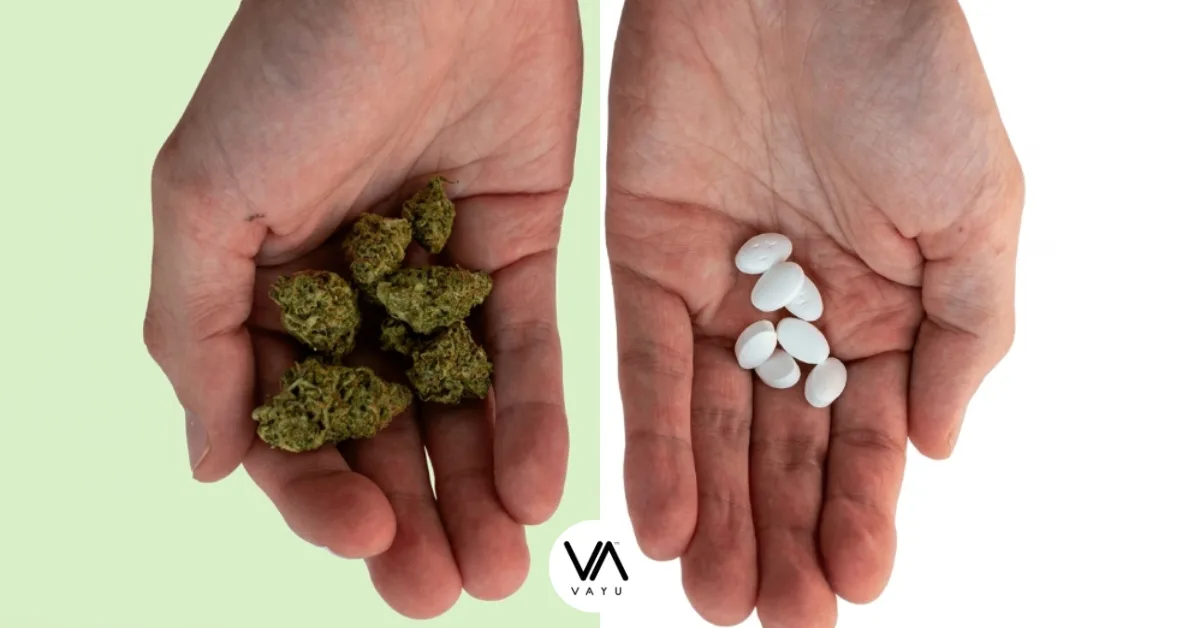
Quick answer: Yes. Cannabis can change how some prescription medicines work. Most of these effects happen in the liver. If you take any daily medication, talk with your doctor or pharmacist before you add THC, CBD, or any other cannabinoid.
How Cannabis Interacts With Medications
Your liver breaks down most medicines. It uses a group of enzymes called CYP450 to do this work.
Cannabinoids like THC and CBD use the same enzymes. When both are in your body at once, they compete for the same workers. That competition can change how fast your body clears a drug.
Three things can happen:
- Drug levels can rise. The medicine stays in your blood longer. Side effects can get stronger.
- Drug levels can drop. Your body clears the medicine too fast. It may not work as well.
- Effects can stack. Two things that each cause drowsiness add up to a lot of drowsiness.
Medications People Ask About Most
Blood thinners
Cannabinoids may raise the level of blood thinners like warfarin. Higher levels can mean easier bruising and bleeding. Doctors often watch blood tests more closely when a patient uses cannabis.
Antidepressants and anti-anxiety medicines
Many of these medicines cause drowsiness on their own. Cannabis can add to that effect. The mix can leave you foggy, slow, or very sleepy.
Seizure medicines
CBD is well studied here. It can raise the levels of some seizure drugs. Doctors who prescribe both usually adjust doses and order regular blood work.
Sleep aids and sedatives
Cannabis plus a sleep aid is a strong mix. Reaction time slows. Falls and accidents become more likely, especially at night.
Prescription pain medicines
Both opioids and cannabis slow the central nervous system. Together they can slow breathing and dull alertness. The risk is higher for older adults and people with lung conditions.
Does the Way You Take It Matter?
Yes. The form changes how fast and how long an interaction can last.
Edibles and tinctures
These pass through your gut and liver first. They start slower and last longer. That gives them more time to interact with medicines.
Inhaled products
Vapes and flower reach the bloodstream in minutes. Effects come on fast but fade sooner. Interactions can still happen, just on a shorter clock.
Warning Signs to Watch For
- Unusual drowsiness or grogginess
- Dizziness or near-fainting
- Easy bruising or bleeding
- A racing or irregular heartbeat
- Sudden mood changes
- A feeling that your medicine has stopped working
If you notice any of these, contact your healthcare provider.
How to Stay Safe
- Talk to your doctor or pharmacist first. Bring a list of everything you take.
- Start low and go slow. Use the smallest amount that works for you.
- Never stop a prescription on your own. Stopping suddenly can be more dangerous than any interaction.
- Keep your timing steady. Taking products at the same time each day makes effects easier to track.
- Know your dose. Lab-tested products with a Certificate of Analysis tell you exactly how much THC or CBD you are getting.
The Grapefruit Rule of Thumb
Here is a simple test many pharmacists suggest. Some medicines carry a warning not to eat grapefruit. Grapefruit blocks the same liver enzymes that cannabinoids use.
If your medicine has a grapefruit warning, treat cannabis with the same caution. Ask your pharmacist before mixing them.
What to Tell Your Doctor
Short, honest details help your doctor protect you. Mention:
- Which products you use, such as gummies, vapes, flower, or tinctures
- How much THC or CBD each serving has
- How often you use them, and at what time of day
- Any new side effects you have noticed
Frequently Asked Questions
Can cannabis change how my medication works?
Yes. Cannabinoids can change how the liver processes certain medicines. Levels can go up or down.
Which medications interact the most?
Blood thinners, antidepressants, seizure medicines, sedatives, and prescription pain medicines come up most often.
Can cannabinoids increase drowsiness with my medication?
Yes. Mixing cannabis with sedatives, sleep aids, or anti-anxiety drugs can multiply fatigue and slow your reflexes.
Should I stop my medication if I use cannabinoids?
No. Never stop or change a prescription without guidance from your prescriber.
Do edibles interact longer than vapes?
Usually, yes. Edibles process through the liver and stay active longer. Inhaled products act faster and fade sooner.
Is CBD safer than THC for interactions?
Not always. CBD competes strongly for the same liver enzymes. It can affect medication levels even though it does not cause a high.
Want to go deeper on how cannabinoids work together? Read our guide to multi-cannabinoid blends.
This article is for education only. It is not medical advice. Talk with a licensed healthcare professional about your own medications. Hemp-derived products are for adults 21 and over.
Shop VAYU - Lab-Tested, Hemp-Derived, 21+
Every VAYU product is third-party lab-tested with a published Certificate of Analysis. Explore THCA flower, concentrates, vapes, gummies and pre-rolls.

